


Old Ford Pick-Up Trucks: A Timeless Utility
Old Ford pick-up trucks have carved their place in automotive history, transcending generations with their enduring charm and unparalleled utility. These iconic vehicles, produced from the 1930s to the late 1970s, have a rich legacy that continues to capture the hearts of enthusiasts and collectors today.
Versatility Beyond Compare: One of the key reasons why old Ford pick-up trucks remain beloved is their sheer versatility. Whether it's the robust F100, the iconic F150, or the workhorse F250, these trucks were designed to handle tough tasks. From farm work to construction sites, they've been the backbone of American labor for decades.
Classic Design That Turns Heads: The timeless design of these trucks is nothing short of legendary. With their distinctive combination of front grilles, headlights, and bold lettering, they exude a sense of nostalgia that's hard to replicate. Restoring and showcasing these vehicles at car shows is a popular hobby among enthusiasts, and it's no wonder – the sight of a beautifully restored old Ford pick-up truck is a showstopper.
A Connection to the Past: Owning and driving an old Ford pick-up truck is like stepping back in time. These vehicles carry with them the stories of countless adventures, road trips, and hard work. Many families have passed down their beloved Ford trucks from one generation to the next, making them cherished heirlooms. Endless Customization: Enthusiasts have embraced the art of customization, turning old Ford pick-up trucks into unique creations. From hot rods to custom paint jobs, the possibilities are endless.
Restoring and personalizing these trucks has become a thriving subculture in the automotive world. In conclusion, old Ford pick-up trucks are more than just vehicles; they're a symbol of American history, hard work, and ingenuity. Their enduring appeal and unmatched utility ensure that they will remain beloved classics for generations to come.

INSTALLING A CLASSIC FORD DISTRIBUTOR INTO OLD FORD TRUCKS AND CARS
INSTALLING A CLASSIC FORD DISTRIBUTOR
1932-1941 Old Ford Trucks, 1932-1941 Ford Passenger Cars and 1939-1941 Mercury Cars with original V8 distributor:
1. Check inner caps one at a time to make sure they fit distributor housing, sand them if needed. Also check to make sure once installed rotor does not hit the inner cap. After fitting inner caps put inner and outer caps together with the spark plug wires and set aside.
2. Mount coil to distributor making sure coil brush makes contact with rotor and copper contact is not bent.
3. Make sure the mounting surface is clean and there is nothing in the camshaft slot where the distributor mounts. Check to make sure mounting bolt threads are clean and free of dirt, set bolts on top of engine for easy reach.
4. Time to mount the distributor. Put gasket on base of distributor, you can put a small amount of sealant on the gasket. Place distributor on to timing cover using fingers to turn rotor to make sure distributor is correctly seated in the camshaft. The distributor will mount flat to the timing cover when correctly installed. If the distributor is not seated correctly you can crack the distributor case when you tighten the bolts. Now you can put the three mounting bolts in and tighten. Do not over tighten(snug).
5. Install inner/outer caps to the distributor and pop the bail over to hold in place.
6. Install vacuum line to distributor.
1941-47 (6 Cylinder “G” Engine) Old Ford Trucks and Passenger Cars, 1942-1947 Old Ford Trucks and 1942-1948 Passenger Cars/Mercury Cars (V8):
1. Make sure the mounting surface is clean and there is nothing in the camshaft slot where the distributor mounts. Check to make sure mounting bolt threads are clean and free of dirt, set bolts on top of engine for easy reach.
2. Place the rotor on distributor and mount distributor cap and turn rotor slowly to make sure the rotor does not hit the inner cap. If rotor hits cap lightly file end of rotor till it clears. Remove distributor cap and set aside. Leave rotor on distributor.
3. Time to mount the distributor. Put gasket on base of distributor, you can put a small amount of sealant on the gasket, be sure not to get sealant on vacuum rubber grommet. Place distributor on to timing cover using fingers to turn rotor to make sure distributor is correctly seated in the camshaft. The distributor will mount flat to the timing cover when correctly installed. If the distributor is not seated correctly you can crack the distributor case when you tighten the bolts. Now you can put the two mounting bolts in and tighten. Do not over tighten(snug).
4. Install distributor cap and pop clips on for 42 crab cap. If you have a 46-48 with the inner and outer cap you will have to install plug wires into cap first before installing caps on distributor.

Reproduction parts vs used/nos
As a classic Ford enthusiast, my journey in the realm of restoration has been nothing short of exhausting. The thrill of bringing a vintage beauty back to its former glory is unparalleled. However, this passion comes with its challenges, the most significant being sourcing the right parts. This is where classic reproduction Ford parts have become a game-changer for someone like me.
For years, the pursuit of authentic, original used and NOS parts was akin to searching for a needle in a haystack. These parts, often scarce and very expensive, could mean the difference between a stalled project and a triumphant restoration. Then entered the world of reproduction parts – a world that has not only made restoration more accessible but also more reliable.
Initially, I was skeptical about using reproduction parts. Would they fit correctly? Would they maintain the authentic look and feel of my classic Ford? These concerns, however, were quickly dispelled. Modern reproduction parts are crafted so that they seamlessly blend with the original components. Manufacturers use advanced technologies and materials to replicate parts.
One of the biggest advantages I've experienced with reproduction parts is the availability of parts. Unlike original parts, which may have undergone decades of wear and tear, reproduction parts are brand new and often incorporate modern engineering improvements. This doesn't just bring peace of mind; it enhances the driving experience, making it safer and more enjoyable.
From a cost perspective, reproduction parts are generally more affordable than their NOS counterparts. This affordability has allowed me to allocate resources to other aspects of restoration, like professional paint jobs or interior refurbishments. Moreover, the availability of these parts means less time scouring swap meets and more time in the garage, doing what I love.
In conclusion, classic reproduction Ford parts have transformed the restoration landscape for enthusiasts like me. They bridge the gap between the past and the present, ensuring that the legacy of classic Fords continues to cruise down our roads, not just reside in our memories. They are a testament to the evolving nature of car restoration, blending tradition with innovation, and keeping the spirit of classic Fords alive and roaring.

B-3517-K Upper Steering Tube Bearing Kit
Since you buy all your classic Ford parts from us, we thought we would enlighten you to a product that you might find useful! Let’s say you’re cruising around town in your Classic Ford… you’re reveling in the number of folks you see looking at your ride (yes your car, not you anymore). You roll to a stop easily and decide to turn the corner and drive down Main Street to see if any of your buddies have made it to the Burger Barn. Suddenly, you feel “clunk” and you KNOW the old Ford didn’t come that way from the factory, so you begin to wonder “Hmmm, what could the old girl need now?”Finishing the cruise you head home and call it a night.
Next day you’re up and at ‘em, headed out to the garage. You whizz past your wife in your grubby's and wonder for a moment why she has a big grin on her face, “Oh well, she musta been on the phone” you figure. With a big grin on your face and a wave to the wife, you whistle out loud as you head out the door thinking, “I’ll be at this most of the day” After organizing your tool box and getting everything ready for troubleshooting you begin to diagnose what could be ailing your “baby”.
After troubleshooting for a while, you begin to realize that the bushing in the upper steering tube has worn out. It turned to rock and the steering shaft is wobbling around in the tube causing the clunk you felt last night. “Well, that’s a relief” you gush, “I don’t need to tear apart the front end!” “I wonder if Ford has a warranty recall on those” you chuckle to yourself as you pull your dog eared copy of your trusty C&G Ford Parts catalog off the shelf. You see that there is a replacement rubber upper bushing that often gets worn out over the years. “Just what I need” you think. “Hold the phone, what’s this?” you spot a new- fangled “kit” that only C&G has! This Upper Steering tube bearing kit includes bearing, spring, and bushing sleeve that replaces the original rubber bushing for a longer lasting, easier turning, tight fit. The kit includes a diagram to show you exactly where to install the parts, and in it what order. “Excellent” you whistle. So you pick up the phone, call C&G and after speaking to some friendly and knowledgeable parts folk, you have your kit on the way.
A couple days later, your classic Ford parts show up and you’re ready to install the new B-3517-K kit you ordered. Remove the steering wheel. Remove original rubber bushing from over worm shaft. Install in this order- bearing , sleeve , spring. Make sure the tapered ends are facing down on both bearing and sleeve, drive the bearing down the worm shaft about 3/4" with a large socket, then let sleeve follow. Finally, put spring over worm shaft, in-between the sleeve and the steering wheel. Put steering wheel back on and tighten down the steering nut. No more play in the upper part of the column! Steering Tube Bearing Kit B-3517-K

Classic Ford Parts
Classic Ford parts are essential components for enthusiasts and collectors who aim to restore, maintain, or customize their vintage Ford vehicles. Ford, one of the most iconic automakers in history, has produced a range of classic cars that have a special place in the hearts of many. From the legendary Model T to the Mustang, the legendary F series pick ups and Mercury's each classic Ford model has its unique set of parts and accessories that are sought after by collectors and restorers worldwide.
The allure of classic Ford parts lies in their ability to bring a piece of automotive history back to life. These parts are not just replacements; they are fragments of a bygone era, each with a story to tell. Restoring a classic Ford using reproduction parts is like preserving a piece of art. It's about maintaining the integrity and authenticity of a vehicle that has been a symbol of American culture and innovation.
One of the challenges in restoring classic Fords is finding the right parts. Authentic parts are often scarce, and locating them can be a painstaking process. Fortunately, C&G Ford Parts has made it easier for enthusiasts and restorers to find what they need. We have have a vast inventory of reproduction parts, from crank pulleys to dash bezels, and we cater to a range of models and years.
The quality of classic Ford parts is paramount. Authentic parts are typically more durable and fit better than aftermarket replicas, but are very hard to find. Reproduction parts on the other hand ensure that the vehicle remains true to its original form, which is crucial for maintaining its appeal. For those who cannot find authentic parts, high-quality reproductions are the next best option. These parts are manufactured to match the original specifications as closely as possible.
For many, the restoration of a classic Ford is more than a hobby; it's a passion. It involves meticulous work and a deep appreciation for the craftsmanship and engineering of a bygone era. Whether it's a complete restoration or a minor repair, using classic Ford parts is essential to keeping the legacy of these timeless vehicles alive. As these cars continue to age, the demand for high-quality classic parts is only expected to grow, making them an integral part of the classic car community.
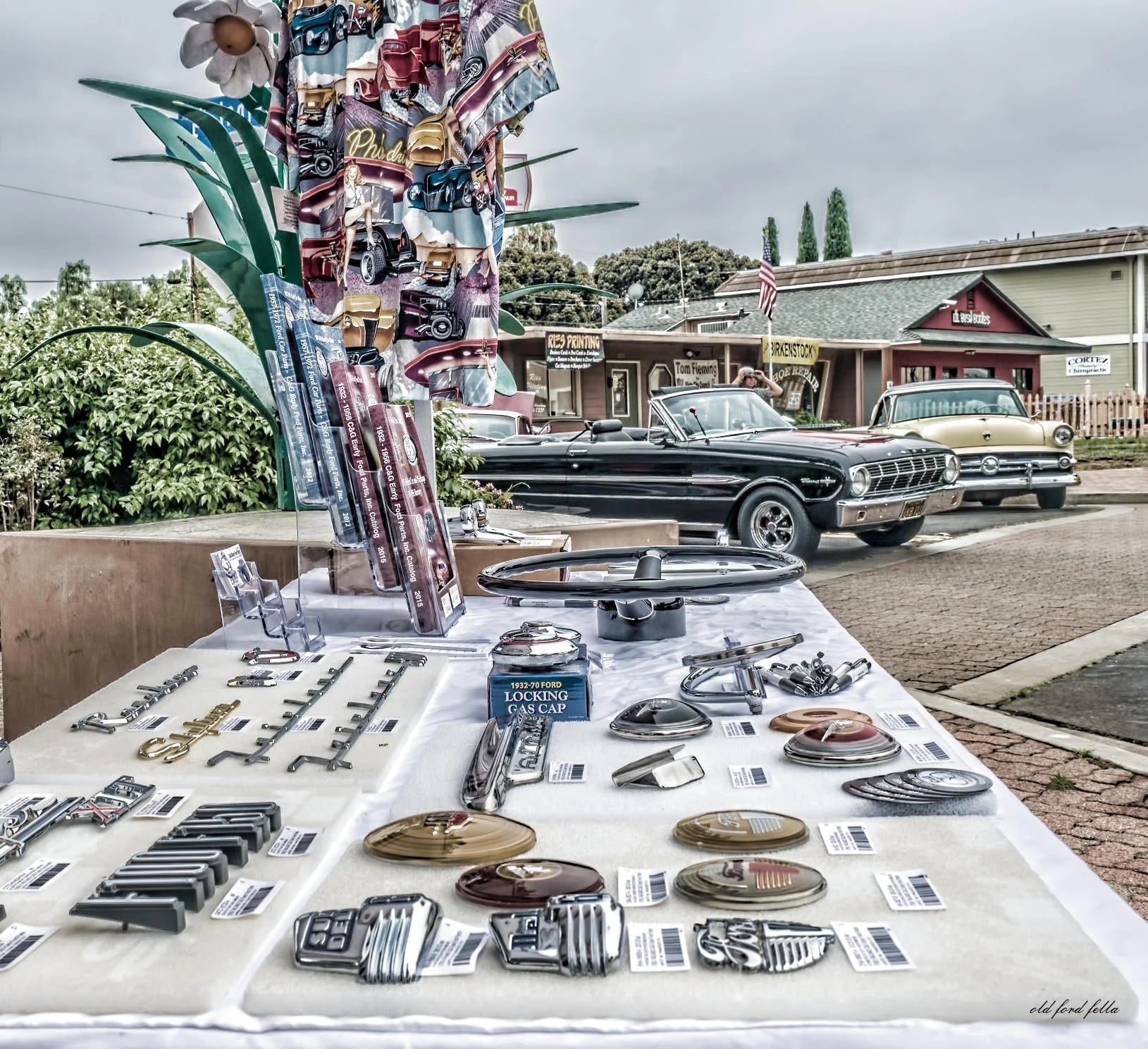
YOUR CLASSIC FORD PARTS STORE
YOUR CLASSIC FORD PARTS STORE
If you own a classic Ford, you’re used to dependability. You go out, you start the vehicle, and it runs. That’s the way it should be. After all, when it’s an older Ford, it has longevity built right into it.
Sometimes, though, things will take a toll on the best ride you’ve ever owned. Could be the weather - or a little ding or two that happens when someone isn’t paying attention and they run into you. Whatever the reason, if you’ve got something on your list that you need for your old Ford, you can find it at a C&G Ford Parts. You’ll find thousands upon thousands of parts that can get your Ford in the best shape, even if you own one from the late 1970's.
That’s sure to give you peace of mind right there. Say you’ve got a 1979 Ford F150 pickup. The jet-black custom paint on it just glints in the sunlight. Your truck is the envy of the neighborhood and everywhere else that you take it. You worked hard for that truck and you deserve to show it off. Taking a friend out for a round or two of golf, you park the truck in the lot carefully away from other cars. But you know how it goes. There always has to be someone who parks right up on you. Only this time, they broke your driver’s side mirror up pretty good and took off without having the decency of letting anyone know. When you do a thorough examination, you see that the door is fine, but the mirror can’t be repaired - the damage is too bad. It’s got to be replaced. Besides making you mad, you’re now faced with the task of figuring out where you’re going to go to get one like it.
No worries, because you can get the part you need right at a classic Ford parts store, C&G Ford Parts to be exact. Places that have the stock you’re looking for can easily cover getting you that mirror in no time. Best of all, getting that replacement mirror in an exact match for your truck isn’t going to cost you every penny you’ve got in the bank. At C&G Ford parts, not only will you find what you need when you need it, but you’ll find it for a reasonable price as well. You can’t always prevent bad drivers from doing foolish things and ending up damaging your Ford. But you can rest assured knowing that a C&G Ford parts has got you covered. So take that truck out for a spin any time. They’ll be waiting on you when you need them.

Old Ford Drum Brake History and Tutorial
Old Ford drum brake history and tutorial
Pre 1967 old Ford cars and old Ford trucks used a drum brake system. In these systems, pressure applied to the brake pedal is transmitted to the master cylinder, which in turn disperses the energy ultimately to the brakes in each wheel. The master cylinder uses the brake fluid to move the wheel cylinders, which in turn moves the brake shoes in the drum.
There is a front and back brake shoe, the rear one for stopping a vehicle in drive and the forward one for stopping a vehicle in reverse. When either shoe is pressed against the anchor pin, the brakes are engaged, and the vehicle comes to a stop. The brake pads form the shoes to the anchor pin so there is no slipping. The padding on the rear brake shoe is typically longer and sometimes made of a different material to allow the shoes to wear at a similar rate, since the rear shoe sees much more use.
The brake shoes are secured in the drum with both hardware and return springs, which must meet ideal sizing and tension specifications for your make and model for top brake performance. These parts should be replaced any time you work on the brakes in order to counteract wear and tear that can lead to longer stopping times.
Stock brake line hoses will have a rubber lining, while aftermarket hoses are available in a stainless braided wrap to preserve the hose. Whichever type you get, make sure the hoses are the correct thread size and length for your year and model and meet DOT safety standards. The rear wheel drum brakes will also contain the parking brake mechanism and will have a cable to the parking brake.
Brake pipe must be double flared and use flared nuts. It can be purchased with the flaring already completed or you can cut your own and flare it yourself, but it should meet or exceed DOT safety standards.
Hydraulic brakes will fail if there is a weak point in the system, so make sure all your hose and fittings are SAE rated and correctly installed. If you are unsure after installation, test the brakes at low speed in a safe area, such as your driveway or an empty parking lot before taking the vehicle on the road.
Starting in 1967 all old fords have a dual master cylinder. This part separates the wheel hydraulics of the front and rear of the car, so a failure in one will not cause a failure in the other. In vehicles without this feature, a leak anywhere in the brake line will cause the entire brake system to fail. With a dual master cylinder, a leak in the front brake system will not affect the rear and vice versa. This is standard in vehicles made after '67, but it's a good safety upgrade for older classic Fords as well.
Many classic Ford owners choose to upgrade their front brake system to disc brakes, or the complete system. Drum brakes can overheat and fail in high braking conditions, such as rapid stops at high speeds or driving downhill on mountainous roads. Disc brakes are open and exposed to the outside air, which prevents overheating and brake failure. While this upgrade is not strictly necessary, it's a good idea if you frequently drive in hilly or mountainous areas.
Original Ford brake shoes used asbestos in the brake pads. If you are working on a vehicle with its original brake shoes or if you are uncertain if they are original, wear a respirator rated for asbestos while working and wet the brake pads before opening the drum to prevent the asbestos from becoming air born. When cleaning dust from drum brakes, use a dense filtration system to trap the asbestos and dispose of it properly.
You can resurface a drum with minor surface issues, but make sure it stays within factory limits for your year and model. Worn or thin drums can break apart or crack and cause brake failure. If you see excessive wear and tear, replace the drum.
If you are replacing a leaking wheel cylinder, it's a good idea to do them all at once, including the master cylinder. If you have had problems with one, you will soon have problems with the rest. In addition, you won't need to remember which cylinder was replaced when for future maintenance if they were all replaced at once.
You can use a vacuum bleeder to remove old brake fluid and contaminants. Once you remove the old fluid you can use denatured alcohol followed by air to purge the lines. Vacuum each cylinder, including the master cylinder, and replace the old fluid with new, DOT 3 or 4 fluids. When changing fluid, change the rubber hoses and seals. If you have a combination disc and drum system, only use DOT 4 fluid. To ensure a complete cleaning, vacuum some of the new fluid through as well do catch any missed contaminants.
When working on or near the brake line, make sure no petroleum-based liquid, such as gasoline, oil, or mineral oil, encounters the hosing. These oils can break down the rubber and cause hoses to start leaking. Make sure to wash your hands thoroughly before and during working on the brakes system to prevent this, especially if you have been working on other parts of the vehicle.
When working on your brakes, make sure to follow safety precautions, use safety rated parts, and check over your work carefully. Drum brakes are a very important part of the machinery, and due to the hydraulic system, can easily lose stopping power or fail if something is wrong, especially without a dual master cylinder. Whether you're doing regular maintenance or upgrading the whole system, working carefully will ensure a successful job for your vehicle.
Ford F100 Parts
Owning or restoring a Ford F100 means that you’ll need easy access to Ford F100 parts whenever you need them.
You want the right parts to keep your classic humming along for as long as you own it. If you’ve had your Ford for several years, then you probably already know where to get your hands on Ford F100 parts when you need them. If you don’t know because you haven’t had any issues with the truck until now, there are a lot of different ways you can find what you need. Check out places where other classic vehicle enthusiasts gather and talk to them. You can find groups that hang out on or offline. In some towns, the local drive-in restaurant has an area where classic car owners will gather on the weekends in order to show off their cars.
The best place that you can buy Ford F100 parts is from an online store where the employees know about older model cars and trucks and can easily locate or order exactly what you need and ship it right to your doorstep. C&G Ford Parts fits that bill nicely. If you’ve already diagnosed the issue with your Ford and know exactly what part it is that you need, then getting it is going to be fairly simple. But, if like a lot of people, you don’t have in depth knowledge about what could be causing your truck’s issue, the pros can help if they specialize in classic car parts. Many of the employees in a classic auto part business have a love and admiration for the classics and they really know the older vehicles inside and out. Plus, by serving a lot of classic car owners when they have needs, this business more than likely has a lot experience with a wide range of vehicle problems. They may have heard all kinds of stories about what’s going on with the Ford truck and helped other owners with the right Ford F100 parts. Not only will the site know what you’re looking for, but a lot of times, if you ask them how to put a part on, they can tell you how or share online video tutorials with you and save you time.
You gain the benefit of their parts knowledge as well as their mechanical knowledge for the same price. What they may suggest and you may find helpful, is to get a catalog of the parts that they do carry so that you’ll have a listing of the parts and the prices. For most classic vehicle owners, they want their F100 truck in pristine condition inside and out. Getting a part that’s “good enough” isn’t enough, they want the best Ford F100 parts.

Classic Ford Parts for Classy Old Fords
Classic Ford Parts for Classy Old Fords
Seeing a vintage Ford gleaming in the sun at a local car show is a treat for the eyes, but even these beautiful vehicles need parts to keep them running smoothly. When something does go wrong with the vehicle, you need to find a store like ours – some place that understands the intricacies of troubleshooting and replacing old Ford parts and understands the mindset of the early Ford owner. You need to know that our selection covers 1932 through 1972 Old Ford cars and 1932 through 1979 old Ford trucks. We ship worldwide Monday through Friday.
Unfortunately, you probably already personally experienced, and know all too well, what happens when you walk into a chain auto parts store looking for a part for a 1932 anything that Ford rolled off the assembly line. You’ll get a blank look for your asking. You might get lucky and the counter person will do a google search followed by a “no” if you’re lucky, or a shoulder shrug if you’re not.
That’s because these shops carry more parts for current vehicles less than 10 years old and practically nothing for the Old Fords. So as a proof of concept; plug all the information about what you need for your vehicle into the online search area of a chain auto parts store, you’ll see no results and you’re back to square one.
You can save yourself a lot of time and frustration by going straight to people like Kyle, Lee, Kristian or Joe – folks who know how important classic Ford parts are and exactly how to get those quality reproduction parts into your hands. People who own vintage Ford vehicles themselves. That’s one of the reasons we have over 200 vendors and tens of thousands of parts on the shelf, so that these vehicles get the right parts they need and will keep running long after other makes are sitting on the sidelines.
When it comes to working on these old Ford vehicles, we have what you need, the folks who understand what you need and the "how it works", as well as the ability to get it to you fast anywhere in the world. Whether it’s a 1956 F100 truck and you need a windshield seal, or, a 1940 Ford car and it’s a tie rod, you’ll have to look no further than C&G Ford Parts. On the web or on the phone or even if you drop by and chew the fat at the parts counter, we know what classic Ford parts you need.
So, forget the aftermarket big car parts chains and come experience good old fashioned customer service and quality know-how.

1964 Ford Falcon Sprint a Brief History
1964 Ford Falcon Sprint
The 1964 Ford Falcon Sprint is a classic Ford car that holds a special place in the hearts of many car enthusiasts. This vintage Ford model was known for its sleek design, powerful engine, and affordable price. While it may have been over 50 years since its release, the 1964 Ford Falcon Sprint is still a highly sought-after car for collectors and enthusiasts alike. In this article, we will explore the history of this iconic car and discuss the process of restoring one to its former glory.
The History of the 1964 Ford Falcon Sprint 1964 Ford Falcon Sprint The Ford Falcon was first introduced in 1960 as a compact car designed to compete with other popular models of the time, such as the Chevrolet Corvair and the Plymouth Valiant. In 1963, Ford released the Falcon Sprint in hardtop and convertible, a sportier version of the original Falcon. The Sprint featured a more powerful 260 cid V8 engine, bucket seats, and a floor-mounted shifter (when equipped with the optional 4 speed), making it a popular choice among car enthusiasts. The Falcon Sprint hardtop was also used in various racing events, solidifying its reputation as a high-performance vehicle.
If you're looking to restore a 1964 Ford Falcon Sprint, the first step is to find one for sale. While it may be challenging to find one in good condition, there are still some available for purchase. You can search online for classic car dealerships or browse through online marketplaces such as eBay or Craigslist. It's essential to thoroughly inspect the car before making a purchase, as it may require significant restoration work.
Restoring a vintage car like the 1964 Ford Falcon Sprint requires a lot of time, effort, and money. It's crucial to have a clear plan and budget in place before starting the restoration process. The first step is to assess the condition of the car and determine which parts need to be replaced or repaired. It's essential to use original or high-quality reproduction Ford parts to maintain the authenticity and value of the car.
Once you have successfully restored your 1964 Ford Falcon Sprint, it's crucial to maintain it properly to preserve its value and performance. Regular maintenance, such as oil changes, tune-ups, and inspections, is essential to keep the car running smoothly. It's also essential to store the car in a dry, climate-controlled environment to prevent rust and other damage. Owning a 1964 Ford Falcon Sprint is more than just having a classic car; it's about reviving nostalgia and preserving a piece of history.
Restoring this iconic car is a labor of love that requires dedication and passion. But the end result is a beautiful, high-performance vehicle that will turn heads and bring joy to its owner.
Are you a fan of the 1964 Ford Falcon Sprint? Have you restored one yourself? Share your thoughts and experiences in the comments below.

1979 Ford F150
1979 Ford F150
The 1979 Ford F150 stands as a significant chapter in the storied history of Ford trucks. Known for its durability, classic design, and utility, the '79 F150 is a beloved model among enthusiasts of classic Ford automobiles.
Specifications
Engine Options: The 1979 F150 came with various engine options, including: 4.9L 300 Inline-6: A reliable workhorse known for its longevity. 5.0L 302 V8: Offered a balance of power and efficiency. 5.8L 351M V8 and 6.6L 400 V8: These larger engines were preferred for heavier towing and payload capacities.
Transmission: Standard: 3-speed manual. Optional: 4-speed manual and 3-speed automatic.
Dimensions: Wheelbase: Ranged from 117 inches (regular cab, short bed) to 155 inches (SuperCab, long bed). Length: Varied based on the model, from 188.5 inches to 235 inches. Width: Approximately 79 inches.
Towing and Payload: Depended on the engine and configuration, with the larger engines supporting greater capacities.
Part Numbers: Locating specific part numbers for a vehicle as old as the 1979 F150 can be challenging. However, some common parts include: Brake Pads: D84-2 Oil Filter: FL-1A Spark Plugs: AGSF32. For more specific parts and their numbers, enthusiasts often refer to vintage Ford parts catalogs or online forums. A great place to get real people to talk parts with, is C&G Ford Parts in Escondido, California.
Production Numbers: Ford does not publicly release detailed production numbers by year and model. However, it's known that the F-Series was America's best-selling truck in 1979, contributing significantly to the series' overall sales. The F150's popularity in this era helped solidify its legacy in the Ford lineup.
Accessories and Customization: The 1979 F150 was often customized and accessorized, reflecting the owner's needs and style. Popular accessories included: Chrome Bumpers: For enhanced aesthetics. Toolboxes: Fitted in the bed for utility. Lift Kits: Many owners lifted their trucks for off-road capability or for a more imposing road presence. Custom Paint Jobs: Reflecting the era's penchant for personalization.
Conclusion: The 1979 Ford F150 remains a beloved classic. Its robust construction, range of engine options, and classic styling have ensured its lasting appeal. While specific part numbers and production figures can be elusive, the truck's impact on the automotive landscape is undeniable. Whether restored to its original glory or customized for modern roads, the '79 F150 continues to be a symbol of Americana and the enduring legacy of Ford trucks.


