


All

1959 PASSENGER/RANCHERO PARK LIGHT HOUSINGS
INTRODUCING A NEW ITEM, THE 1959 PASSENGER AND RANCHERO PARK LIGHT HOUSINGS!

The Ford Flathead V8: The Engine That Put Power in the People’s Hands
For anyone who’s ever turned a wrench on a pre-’54 Ford, the sound of a flathead V8 firing up is pure Samuel Fordway what was once luxury-car territory available to the everyday American at a price they could actually afford. And for that, it earned legendary status under hoods and in hearts across generations.
Before Henry Ford’s bold move, eight-cylinder engines were reserved for high-end makes like Cadillac and Packard. But the Ford Flathead changed all that. It was relatively simple, durable, and easy to work on—qualities still prized by today's restorers. Displacing 221 cubic inches and producing 65 horsepower in its first iteration, the flathead V8 steadily evolved through the years, eventually reaching outputs over 100 hp with the later 239 cid and 255 cid variants used in post-war cars and Mercury models.
Beyond raw numbers, what makes the Flathead such an icon is its place in American hot rod culture. In the late ’40s and early ’50s, young gearheads yanked these V8s from junked Fords and dropped them into stripped-down coupes, roadsters, and belly tankers. Speed shops sprang up across the country offering hop-up parts—Edelbrock heads, dual-carb intakes, and Isky cams—turning the Flathead into a street and strip warrior.
Today, the Flathead is enjoying a well-deserved renaissance. Whether you're restoring a '40 Ford Deluxe coupe or building a traditional highboy roadster, the right parts make all the difference. Original blocks are getting harder to come by, but high-quality reproduction parts—heads, water pumps, fuel pumps, gaskets, and period-correct hardware—make it possible to bring these iron legends back to life with factory precision.
At C&G Ford Parts, we stock the real-deal reproduction parts classic Ford purists demand. Everything we sell is backed by decades of expertise and a crew that owns and drives classics just like yours.
Ready to keep that Flathead purring like 1950 all over again? Explore our full line of flathead V8 parts and make history roar.

The 1955 Ford Fairlane: A Classic Icon of American Automotive History
The 1955 Ford Fairlane: A Classic Icon of American Automotive History
In the realm of classic American automobiles, the 1955 Ford Fairlane stands out as a significant model that marked Ford's return to prominence in the auto market. Named after Henry Ford's estate, Fair Lane, in Dearborn, Michigan, the Fairlane was introduced as Ford's premier car for that year. With a new frame and 11" brakes, the Fairlane replaced the Crestline as the flagship offering.
Design and Styling
The 1955 Fairlane was distinguished by its elegant and modern styling, characterized by a lower, longer, and wider profile compared to its predecessors. It featured a distinctive stainless steel stripe running along its side with striking 2 tone paint schemes, which became a hallmark of the Fairlane models. The car was offered in six different body styles, including two- and four-door sedans, hardtop, and a convertible known as the Sunliner. A standout among these was the Crown Victoria, which boasted a tinted, transparent roof panel, adding a futuristic touch to its design.
Engine and Performance
The Fairlane came equipped with options for both a 223 cubic inch (3.7 L) straight-six engine, a 272 cubic inch (4.5 L) V8, or a 292 cubic inch V8 (4.8 L) with a 4 barrel carb providing buyers with choices tailored to different performance needs. The V8, in particular, was a point of interest for its power and smooth operation. Transmission options included a Fordomatic automatic or a three-speed manual.
Market Impact
The introduction of the Fairlane was part of a broader effort by Ford to rejuvenate its lineup and recapture market share from competitors like Chevrolet. The Fairlane was not just a vehicle; it was a statement of Ford's commitment to innovation and style. In 1955, Ford managed to outsell Chevrolet, ending a 20-year streak where Chevy had been the best-selling car in America, a testament to the Fairlane's appeal and Ford's strategic marketing.
Features and Accessories
Ford emphasized luxury and convenience with the Fairlane. It included features like dual exhaust systems on higher-end models which improved both performance and sound. The car also introduced several firsts, including Ford's first factory-installed air conditioning system, known as "Select Aire," which was optional. Innovations like the panoramic windshields, new for 1955, offered drivers a broader view, enhancing safety and driving experience.
Cultural Impact
The 1955 Fairlane wasn't just a car; it became an emblem of the era's optimism and love for automotive style. Its design and engineering influenced subsequent Ford models and left a lasting impression on American car culture. The Fairlane's success helped pave the way for future models, including the introduction of the Fairlane 500.
Legacy
Today, the 1955 Ford Fairlane is celebrated by collectors and car enlthusiasts for its blend of style, performance, and historical significance. Restorations are common, and the car's parts are sought after, with companies like Classic Industries providing a range of reproduction parts for enthusiasts looking to bring their Fairlane back to its original splendor.
In conclusion, the 1955 Ford Fairlane was more than just another car on the road; it was a symbol of Ford's resurgence and a reflection of the vibrant automotive culture of the 1950s. Its design, performance, and the enduring legacy it left behind continue to make it a beloved piece of automotive history.

1950s Ford Cars and Trucks Evolution
The 1950s marked a period of significant evolution for Ford Motor Company in both the automotive and truck sectors, characterized by engineering innovations and aggressive marketing strategies that aimed to capture the burgeoning post-war American market.
Engineering Innovations:
Starting with the 1949 models, Ford introduced a complete redesign that set the tone for the decade. This new line was characterized by more aerodynamic and modern styling, moving away from the pre-war designs. The Ford '49, as it was popularly known, featured a more integrated body design with smooth lines, which was a significant departure from the previous look. This design ethos continued into the 1950s, with each model year bringing incremental changes, but the 1952, 1955, and 1957 models were particularly notable for their styling advancements and engineering enhancements.
The introduction of the overhead valve (OHV) V-8 engine in 1954 was a pivotal engineering achievement, leading to the launch of vehicles like the Thunderbird in 1955, which was Ford's answer to Chevrolet's Corvette. This engine was not only more powerful with its 181 horsepower but also set Ford apart in what became known as the horsepower race of the 1950s. The Fairlane Crown Victoria, introduced later in 1955, embodied luxury within the mid-price range, featuring this new V-8 engine alongside other engineering improvements like power steering and brakes, which became options in Ford's vehicles during this period.
For trucks, the 1950s saw the further development of the F-Series, which had been introduced in 1948. The F-Series trucks evolved with the inclusion of a more robust chassis, new suspension systems, and eventually, the integration of V-8 engines, making them not only workhorses but also suitable for personal use. The F-100, in particular, became a cultural icon, known for its sleek design and versatility.
Marketing Strategies:
Ford's marketing in the 1950s was as dynamic as its engineering. The company leveraged the post-war economic boom, focusing on the American dream of owning a car. Ford capitalized on the new consumer culture by introducing vehicles that appealed to a wide demographic. The Thunderbird, for instance, was marketed not as a sports car but as a "personal car," emphasizing comfort and style over raw performance, aiming to attract both men and women.
The introduction of models like the Edsel in 1958 was an ambitious marketing move. Named after Henry Ford's son, it was meant to fill the gap between Ford and Mercury in Ford's product lineup. Despite its innovative features like push-button transmission controls and a unique grille design, the Edsel was a commercial failure due to poor market reception, which highlighted the limits of marketing when not backed by consumer desire.
Ford also pioneered safety features, introducing seat belts as standard in 1956, a move that was heavily marketed as part of Ford's commitment to customer safety. This era also saw Ford's advertising becoming more sophisticated, using television and print media to showcase their vehicles' modernity, performance, and styling.
In summary, the 1950s were transformative for Ford. From engineering perspectives, the decade was about power, efficiency, and safety, while from a marketing standpoint, it was about capturing the spirit of an era filled with optimism and economic prosperity. Ford's vehicles during this decade not only shaped its destiny but also influenced the American automotive landscape profoundly.

Baby Moon hub cap
The Baby Moon Hub Cap: A Blast from the Past
If you're a fan of classic automobiles and have a soft spot for Americana, you've likely come across the term "baby moon hub cap" at some point. These shiny, timeless accessories have a fascinating history and a unique place in the world of automotive design. In this blog post, we'll dive into the development, design, production statistics, and popularity of the baby moon hub cap.
Development and Design
The Baby Moon hub cap, also known simply as "baby moons," emerged during the golden era of classic Ford automobiles in the 1950s and 1960s. These hub caps are characterized by their smooth, minimalist design. Unlike their full-sized counterparts, which were aluminium, baby moons were all about simplicity and elegance.
Made from high-quality chrome or stainless steel, baby moons were designed to fit snugly over the hub of a car's wheel, providing a clean and polished look. Their minimalist design made them a popular choice among car enthusiasts who appreciated the understated beauty of classic cars.
Production Statistics
While it's challenging to pinpoint exact production statistics for baby moon hub caps, they were widely produced during the mid-20th century, primarily as aftermarket accessories. Various manufacturers, including companies like Mooneyes, produced these hub caps to cater to the growing demand from car owners looking to enhance the aesthetics of their vehicles.
During their heyday, baby moons could be found on a wide range of American cars, including Ford, Chevrolet, and Dodge models. They became a symbol of the era's automotive style and are closely associated with the classic Ford automobiles that many enthusiasts still cherish today.
Popularity Over the Years
The popularity of baby moon hub caps has endured over the years, thanks to their timeless design and association with the classic Americana era. Car enthusiasts and collectors continue to seek out these hub caps to complete the authentic look of their vintage vehicles.
Additionally, baby moons have found a place in modern hot rod and custom car culture. Enthusiasts often use them to add a touch of nostalgia to their custom builds, demonstrating the enduring appeal of these simple yet iconic accessories.
Conclusion
In conclusion, the baby moon hub cap is a classic automotive accessory that has left an indelible mark on the world of classic cars and Americana. Its development, design, and continued popularity reflect the enduring appeal of timeless automotive aesthetics. While exact production statistics may be elusive, the legacy of the baby moon hub cap lives on in the hearts of car enthusiasts and collectors, making it a cherished piece of automotive history.
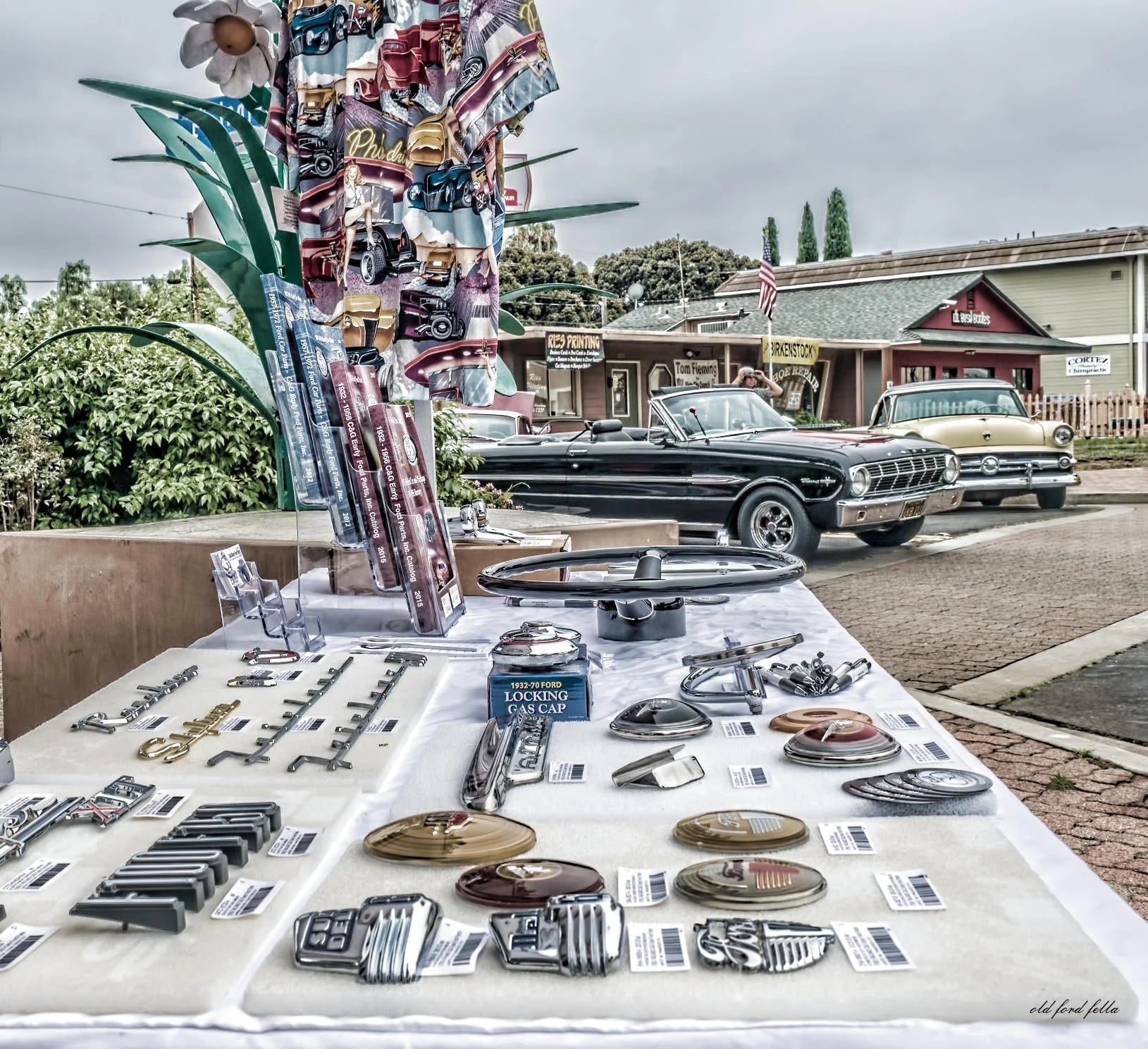
Reviving Nostalgia: Overview of the 1964 Ford Falcon Sprint
The 1964 Ford Falcon Sprint is a classic car that holds a special place in the hearts of many car enthusiasts. This vintage Ford model was known for its sleek design, powerful engine, and affordable price. While it may have been over 50 years since its release, the 1964 Ford Falcon Sprint is still a highly sought-after car for collectors and enthusiasts alike. In this article, we will explore the history of this iconic car and discuss the process of restoring one to its former glory.
The History of the 1964 Ford Falcon Sprint 1964 Ford Falcon Sprint The Ford Falcon was first introduced in 1960 as a compact car designed to compete with other popular models of the time, such as the Chevrolet Corvair and the Plymouth Valiant. In 1963, Ford released the Falcon Sprint in hardtop and convertible, a sportier version of the original Falcon. The Sprint featured a 260 cid V8 engine, bucket seats, and a floor-mounted shifter (when equipped with the optional 4 speed), making it a popular choice among car enthusiasts. The Falcon Sprint hardtop was also used in various racing events, solidifying its reputation as a high-performance vehicle.
If you're looking to restore a 1964 Ford Falcon Sprint, the first step is to find one for sale. While it may be challenging to find one in good condition, there are still some available for purchase. You can search online for classic car dealerships or browse through online marketplaces such as eBay or Craigslist. It's essential to thoroughly inspect the car before making a purchase, as it may require significant restoration work. Restoring a vintage car like the 1964 Ford Falcon Sprint requires a lot of time, effort, and money. It's crucial to have a clear plan and budget in place before starting the restoration process. The first step is to assess the condition of the car and determine which parts need to be replaced or repaired. It's essential to use original or high-quality reproduction parts to maintain the authenticity and value of the car.
Once you have successfully restored your 1964 Ford Falcon Sprint, it's crucial to maintain it properly to preserve its value and performance. Regular maintenance, such as oil changes, tune-ups, and inspections, is essential to keep the car running smoothly. It's also essential to store the car in a dry, climate-controlled environment to prevent rust and other damage.
Owning a 1964 Ford Falcon Sprint is more than just having a classic car; it's about reviving nostalgia and preserving a piece of history. Restoring this iconic car is a labor of love that requires dedication and passion. But the end result is a beautiful, high-performance vehicle that will turn heads and bring joy to its owner.
Are you a fan of the 1964 Ford Falcon Sprint? Have you restored one yourself? Share your thoughts and experiences in the comments below.
Old Ford? Come experience GREAT customer service!
Old Ford? Come experience GREAT customer service!
Have you had enough of poor customer service and lack of technical knowledge when it comes to your old Ford? Believe me we know what it's like. If you're like most people, you probably start off full of drive and excitement, and making good progress on your project for a few weeks or months, but then - Murphy gets busy annoying you! As soon as you get one thing sorted another pops up, you get distracted and your project gets dumped in the too hard basket. And to make matters worse, there's always that one person who keeps asking you how your restoration is going, and you know they're having a good old laugh at your expense. You end up feeling confused and overwhelmed by all the technical jargon and mechanical issues you just don't understand.
Until recently the only solution for amateur mechanics trying to break through the restoration problem on an old Ford, was to either obtain a full-time flathead mechanic somewhere or to hire a restoration company to do it for you. The problem with this option is that expert flathead mechanics are hard to find, and even if you do manage to find one willing to help you out, you'll be looking at upwards of $100 per hour, which is simply out of reach for most old ford owners. And it's for this reason that I'm pleased to reveal C&G Ford Parts has free technical help for its customers and we are staffed with folks that currently own or have owned old Ford cars or old Ford trucks!
Here at C&G Ford Parts we've been helping old Ford owners with their restoration needs and supplies for over 40 years! And what we've proven over and over in our business is that the easiest and most reliable way to finish up your project is by adding a go to guy to your toolbox. It's literally the difference between a frustrating and annoying project and a "life changing, quit your job" kind of result. (ok, maybe not quit your job). With C&G Ford Parts lending their expertise and supplying your parts you'll be able to restore your vehicle with the fun and excitement you had hoped it would bring! If you get stuck you always know all you need to do is dial us up or drop us an email and we'll be there! Now what makes our service different from any other parts service out there is that there's NO additional costs - No out today fees, no added shipping fees, no waiting for days for a tech to call back AND you're covered for as long as you're a customer!
Let's take a look at how C&G Ford Parts helps you. Our customers enjoy:
Free tech support from old ford owners
Friendly live person customer service
Best reproduction parts available
Over 100 manufacturers
Worldwide shipping
This is just a taste of what people are already saying about C&G Ford Parts:
----- Well organized, responsive, helpful in planning parts needs for specific project —Lawrence G.
----- How quick and efficient can you guys get?!! —Terry M.
So, You've wasted enough of your time, energy, and sanity on trying to fix those irritating issues by yourself! You can finally put an end to all your frustration and disappointment simply by giving C&G Ford parts a call, email or web form question. Just imagine waking up in the morning, opening your mailbox, and finding your parts order no matter where you are in the world. You smile to yourself as you realize the fun an old car can be when you have the right help. So pick up the phone or computer mouse and let us fill your old ford parts order quickly and efficiently.

Exploring an American Classic The Ford F100
The Ford F100, a member of the renowned F-Series, has a rich history that spans decades, evolving from a utilitarian work truck to a sought-after classic. Originally designed to meet the demands of post-war America, the F-100 has since become a symbol of vintage style and automotive nostalgia.
The F-100 debuted in 1953, a milestone that marked the second generation of Ford's F-Series. Known for its increased dimensions, improved engines, and updated aesthetics, the F-100 was a significant upgrade from its predecessors. It featured a more powerful 215cid inline-six engine, with an option for a 239cid V8, delivering robust performance for the era. The truck boasted a maximum payload capacity of approximately 1,000 to 1,500 pounds, catering to the needs of businesses and individual users alike.
In terms of pricing, the F-100 was marketed as an affordable, reliable work truck. Prices started around $1,600, a figure that, when adjusted for inflation, underscores the truck's value proposition. Fast forward to the present, and the Ford F100 occupies a different space in the automotive world. No longer just a work vehicle, it has become a beloved classic, cherished by collectors and enthusiasts.
The market for vintage F-100s has seen a significant uptick, with fully restored models fetching prices upwards of $20,000 to $30,000, and exceptional specimens or custom builds going even higher. The appeal of the F-100 in today's market lies in its simplicity, classic design, and the nostalgia it evokes. It's a canvas for customization, with a thriving aftermarket offering everything from original replacement parts to modern upgrades.
The versatility of the F-100 makes it a favorite among those looking to create a personalized classic that combines vintage charm with modern performance. The demand for original equipment specifications remains high, with purists seeking to restore F-100s to their factory glory. This desire for authenticity reflects a broader trend in the classic car market, where originality often equates to higher value.
Conclusion
The Ford F-100's journey from a practical utility vehicle to a cherished classic is a testament to its enduring appeal. In the current market, it embodies a blend of history, style, and the enduring legacy of Ford's commitment to utility and innovation. Whether restored to its original specifications or customized to modern tastes, the F-100 remains a beloved piece of American automotive history, with a vibrant community of enthusiasts keeping its spirit alive.

CLASSIC MUSTANG PARTS
There’s nothing like the sound of a 289 V8 with a four-barrel carburetor purring down the street. When you’ve got the ponies galloping under the hood of a 1966 Mustang, it doesn’t matter if the sun is shining or the rain is pouring - it’s a beautiful day when you’re behind the wheel of a classic.
Classic cars, especially ones like the Mustang, are always head turners. It’s no wonder your car sounds good. You’ve kept your beauty running smoothly with classic Mustang parts whenever you need to replace something.
Sometimes, when you own a classic, just like with the newer model cars, a problem can develop unexpectedly. The problems can be small or large. For example, you might start to notice that your Mustang doesn’t have the same gallop it used to have.
You don’t see what the problem is until one day, you see smoke like you’ve never seen before. When you see white smoke coming from the exhaust of the car, you need to get it home and check the dipstick to see if there’s a distinctive milky appearance in the oil.
That could mean a blown head gasket. When you realize that there’s a blown head gasket, you know that in order to get the car up and running in the best of shape, you’ve got to find an auto store that sells classic Mustang parts.
You may not have one local, you may have to order online, but whatever you have to do to get parts for your car, it’s worth any effort. You don’t want to compromise with just any parts seller, come to the best here at C&G Ford Parts!
A lot of times, you’ll see shops advertise that their replacement parts for your classic car are so “identical looking” that you can’t see a visual difference. You may not be able to see a visual difference with a knock off part, but you can certainly tell a difference in how the car runs and in how long that part will last.
Buying classic Mustang parts isn’t just for when you need to fix something on the car. These are what car enthusiasts look for when they’re restoring a classic to its former glory - and if you ever decide to sell you car, it should have parts made just for it.
It doesn’t matter if it’s a small job like replacing your gas cap or a big job like replacing the windshield seal - you’ll get more mileage and less headaches by choosing classic Mustang parts from C&G Ford Parts, always choose the best.

Evolution of Ford Generators
The evolution of the early Ford generator is a fascinating journey through the annals of automotive history, showcasing Ford's pioneering role in electrical system innovation. From the early 1900s to the 1950s, Ford generators underwent significant transformations in design and output, reflecting the increasing electrical demands of automobiles.
1920s: The Birth of the Ford Generator In the 1920s, Ford transitioned from the magneto system to actual generators. These early generators, used in models like the Model T, were a leap forward in automotive electrical systems. They typically produced about 6-8 volts and 10-15 amperes. This was a modest output, but it marked a significant improvement over the earlier systems, providing more reliable power for lighting and ignition.
1930s: Advancements in Power Output By the 1930s, as vehicles incorporated more electrical components, classic Ford generators evolved to meet these new demands. The output increased to approximately 12 volts, with the current rising to around 30-40 amperes. This improvement was crucial in powering additional features like radios and heaters, which were becoming standard in vehicles.
1940s: Post-War Technological Growth Post-World War II, the 1940s saw further advancements in Ford generators. The output stabilized around 12 volts, but the current capabilities expanded, reaching up to 40-50 amperes. This era's generators were more efficient and reliable, reflecting technological advancements and the growing complexity of automotive electrical systems.
1950s: The Peak of Generator Technology The 1950s represented the peak of generator technology before the transition to alternators. Ford generators during this decade were robust, producing 12 volts and capable of up to 50-60 amperes. This increased capacity was essential for powering more sophisticated electrical systems, including advanced lighting, climate control, and entertainment systems.
In conclusion, the evolution of the early Ford generator from the 1920s to the 1950s is a testament to Ford's innovation in automotive technology. Each decade brought significant improvements in output and reliability, mirroring the evolution of automobiles themselves. From the humble beginnings of powering basic vehicle functions to meeting the demands of more complex and luxurious features, Ford generators played a crucial role in the advancement of automotive electrical systems.


