Engine specs for the 1979 Ford F150

1979 Ford F150 in blue, front quarter view

Engine specs for the 1979 Ford F150

The 1979 Ford F150 trucks marked the end of the sixth generation of the rugged F-Series pick up trucks, which spanned from 1973 to 1979. Characterized by its design and durability, the 1979 F150 came with a variety of engine options to suit different needs, from more fuel-efficient six-cylinders to powerful V8s.

Here's a breakdown of the engine specifications for all models of the 1979 Ford F150:

  • 4.9L Inline-6 (300 CID): This engine was the base option for many F-150s, known for its reliability and decent fuel efficiency for the time. It produced around 114 horsepower and 223 lb-ft of torque.
  • 5.0L V8 (302 CID): A step up in terms of power, the 302 V8 offered a balance of performance and fuel economy, making around 140 horsepower and 239 lb-ft of torque.
  • 5.8L V8 (351 CID) Windsor: The 351 Windsor was another popular V8 option, known for its robustness and torque. It delivered approximately 150 horsepower and 265 lb-ft of torque.
  • 5.8L V8 (351 CID) Modified (M): The 351M, often confused with the Cleveland, was a variant designed for torque more than outright power, with similar horsepower to the Windsor but different in technical specifications.
  • 6.6L V8 (400 CID): The 400 was essentially a 351M with a longer stroke, offering more torque at lower RPMs, making it ideal for towing and heavy-duty applications. It produced around 158 horsepower and 277 lb-ft of torque.
  • 7.5L V8 (460 CID): Available in certain models and regions, this was the largest and most powerful engine option for the F-150 in 1979, used primarily for heavy towing and high-performance needs. It delivered around 245 horsepower and 380 lb-ft of torque, though these numbers could vary slightly based on specific configurations and emissions controls.

These engines were paired with a variety of transmission options, including three-speed or four-speed manuals, and the C6 automatic transmission for higher torque engines. The choice of engine and transmission significantly influenced the truck's performance, fuel economy, and towing capacity.

Keep in mind, the specific output and performance can vary slightly based on factors like the truck's configuration, optional equipment, and condition. If you're looking into a specific model or have a particular use case in mind (like restoration or modification), it might be helpful to look into more detailed sources or forums dedicated to old Ford trucks, as they can offer a wealth of knowledge and specifics tailored to enthusiasts' needs.

The towing capacity of a 1979 Ford F150 can vary significantly depending on the engine size, transmission type, rear axle ratio, and whether the truck is equipped with optional towing packages. Unfortunately, detailed towing capacity specs for vehicles of this era are not as readily available or as standardized as they are for modern vehicles. However, I can provide you with some general estimates and considerations.

Engine Size and Power: Larger engines with more torque, such as the 6.6L V8 (400 CID) or the 7.5L V8 (460 CID), would naturally offer higher towing capacities due to their ability to generate more power and torque. These engines would be more suitable for heavier towing or hauling duties.

Transmission Type: Trucks equipped with automatic transmissions generally have a higher towing capacity than those with manual transmissions due to the automatic's ability to better manage engine power and torque delivery. Rear Axle Ratio: A higher rear axle ratio can also increase towing capacity, as it provides more torque to the wheels at lower speeds, although this can come at the expense of fuel efficiency.

Towing Packages: If the truck was equipped with a factory towing package, it would likely have included features such as a heavier-duty cooling system, stronger frame and suspension components, and possibly even a different rear axle ratio, all of which would contribute to an increased towing capacity.

As a rough estimate, the towing capacity for a 1979 Ford F150 could range from about 4,000 to 7,000 pounds, depending on the factors mentioned above. It's important to note that these are general estimates, and the actual towing capacity could vary. If you're planning to tow with such a vehicle, it's crucial to consider not just the maximum towing capacity but also the weight of the trailer, the distribution of weight on the trailer, and the condition of the vehicle's engine, transmission, brakes, and suspension.

For specific towing capacities and to ensure safe towing practices, it's recommended to consult a professional mechanic who is familiar with old Ford trucks or to refer to original Ford documentation or a reliable restoration guide.

Leave a comment

Please note, comments need to be approved before they are published.

MORE CLASSIC FORD INSIGHTS

No image

Ford F100 Parts

Owning or restoring a Ford F100 means that you’ll need easy access to Ford F100 parts whenever you need them. You want the right parts to keep your classic humming along for as long as you own it. If you’ve had your Ford for several years, then you probably already know where to get your hands on Ford F100 parts when you need them. If you don’t know because you haven’t had any issues with the truck until now, there are a lot of different ways you can find what you need. Check out places where other classic vehicle enthusiasts gather and talk to them. You can find groups that hang out on or offline. In some towns, the local drive-in restaurant has an area where classic car owners will gather on the weekends in order to show off their cars. The best place that you can buy Ford F100 parts is from an online store where the employees know about older model cars and trucks and can easily locate or order exactly what you need and ship it right to your doorstep. C&G Ford Parts fits that bill nicely. If you’ve already diagnosed the issue with your Ford and know exactly what part it is that you need, then getting it is going to be fairly simple. But, if like a lot of people, you don’t have in depth knowledge about what could be causing your truck’s issue, the pros can help if they specialize in classic car parts. Many of the employees in a classic auto part business have a love and admiration for the classics and they really know the older vehicles inside and out. Plus, by serving a lot of classic car owners when they have needs, this business more than likely has a lot experience with a wide range of vehicle problems. They may have heard all kinds of stories about what’s going on with the Ford truck and helped other owners with the right Ford F100 parts. Not only will the site know what you’re looking for, but a lot of times, if you ask them how to put a part on, they can tell you how or share online video tutorials with you and save you time. You gain the benefit of their parts knowledge as well as their mechanical knowledge for the same price. What they may suggest and you may find helpful, is to get a catalog of the parts that they do carry so that you’ll have a listing of the parts and the prices. For most classic vehicle owners, they want their F100 truck in pristine condition inside and out. Getting a part that’s “good enough” isn’t enough, they want the best Ford F100 parts.
A classic old ford scene featuring 1940's Americana

The Classic Ford Parts Niche and Americana

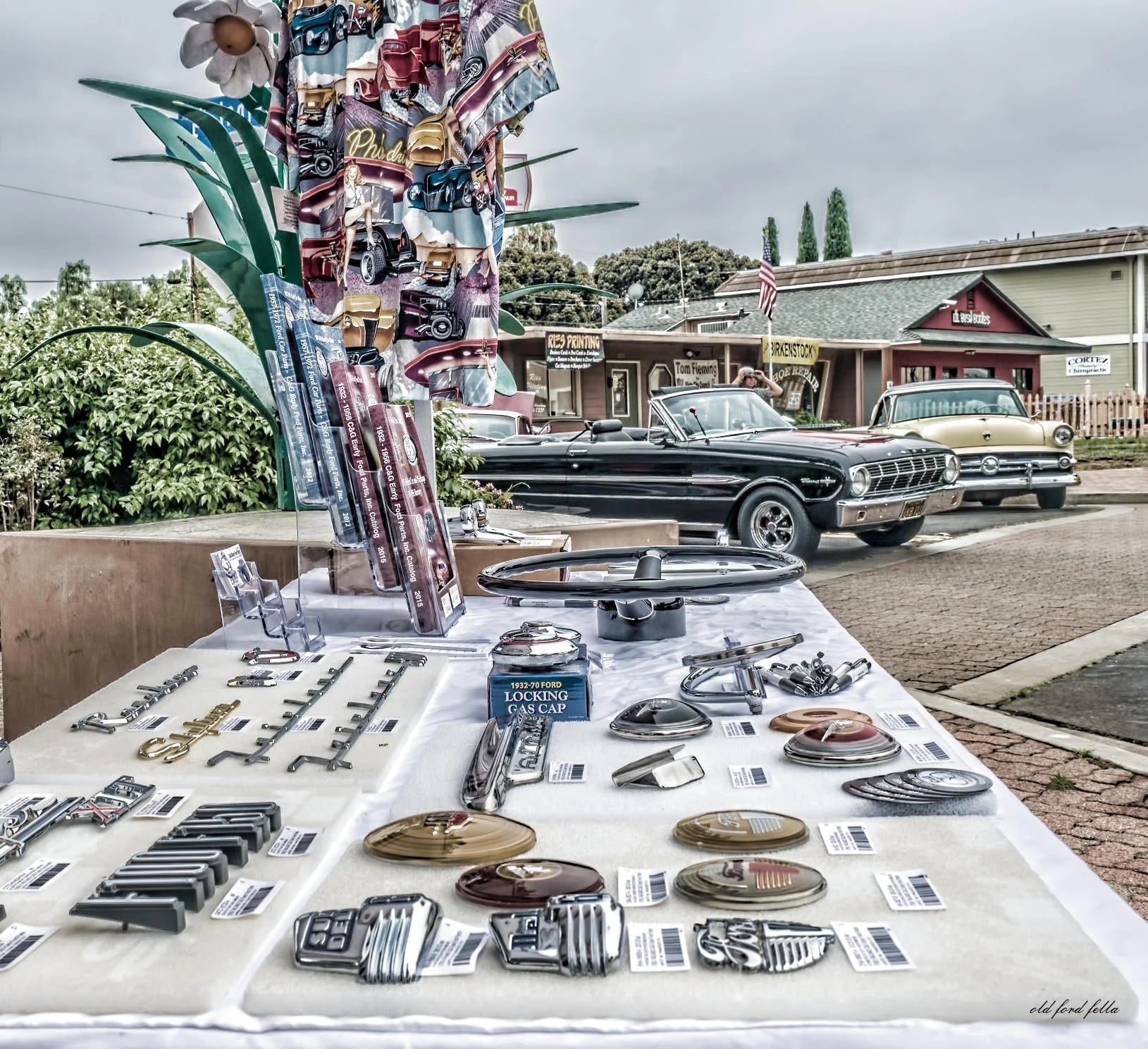
The world of classic Ford parts is a niche fueled by a unique blend of nostalgia, engineering marvel, and a deep-seated passion for automotive history. This niche isn't just about maintaining or restoring old vehicles; it's about preserving a legacy, a piece of Americana that has shaped and been shaped by decades of innovation and culture. At the heart of this niche are the classic Fords themselves - from the groundbreaking Model T, the first car to be mass-produced, to the Mustang, an icon of American muscle and the F series pick ups which supply the backbone of America. Each model represents a different era, a distinct style of engineering and design. Restoring these vehicles is more than a hobby; it's a journey back in time, an attempt to capture the essence of an era long gone. For those immersed in the classic Ford parts niche, the hunt components is a significant part of the excitement. These enthusiasts spend countless hours searching through auto flea markets, online forums, and specialty shops for that perfect part. The joy of finding a rare, original component can be as exhilarating as driving the restored vehicle itself. The community aspect of this niche is incredibly strong. Across the world, classic Ford owners and restorers come together, both online and in person, to share stories, exchange knowledge, and offer support. Car shows and meet-ups turn into celebrations of these automotive treasures, where the beauty and craftsmanship of classic Fords are displayed with pride. Moreover, the classic Ford parts niche is not just about the past; it's about sustainability. In a world increasingly concerned with environmental impact, restoring and maintaining older vehicles is a form of recycling, giving new life to old Fords that might otherwise be forgotten relics. In essence, the classic Ford parts niche is more than a collection of old cars and their components. It's a testament to the enduring impact of Ford's innovations on automotive culture. It's a community bound by a shared passion for the art of restoration, a reverence for history, and the thrill of bringing a piece of that history back to life. For many, it's not just a hobby; it's a way of connecting with the past and preserving it for future generations. Here at C&G Ford Parts we specialize in reproduction Ford parts.
Reproduction parts vs used/nos

Reproduction parts vs used/nos

As a classic Ford enthusiast, my journey in the realm of restoration has been nothing short of exhausting. The thrill of bringing a vintage beauty back to its former glory is unparalleled. However, this passion comes with its challenges, the most significant being sourcing the right parts. This is where classic reproduction Ford parts have become a game-changer for someone like me. For years, the pursuit of authentic, original used and NOS parts was akin to searching for a needle in a haystack. These parts, often scarce and very expensive, could mean the difference between a stalled project and a triumphant restoration. Then entered the world of reproduction parts – a world that has not only made restoration more accessible but also more reliable. Initially, I was skeptical about using reproduction parts. Would they fit correctly? Would they maintain the authentic look and feel of my classic Ford? These concerns, however, were quickly dispelled. Modern reproduction parts are crafted so that they seamlessly blend with the original components. Manufacturers use advanced technologies and materials to replicate parts. One of the biggest advantages I've experienced with reproduction parts is the availability of parts. Unlike original parts, which may have undergone decades of wear and tear, reproduction parts are brand new and often incorporate modern engineering improvements. This doesn't just bring peace of mind; it enhances the driving experience, making it safer and more enjoyable. From a cost perspective, reproduction parts are generally more affordable than their NOS counterparts. This affordability has allowed me to allocate resources to other aspects of restoration, like professional paint jobs or interior refurbishments. Moreover, the availability of these parts means less time scouring swap meets and more time in the garage, doing what I love. In conclusion, classic reproduction Ford parts have transformed the restoration landscape for enthusiasts like me. They bridge the gap between the past and the present, ensuring that the legacy of classic Fords continues to cruise down our roads, not just reside in our memories. They are a testament to the evolving nature of car restoration, blending tradition with innovation, and keeping the spirit of classic Fords alive and roaring.