1979 Ford F150

1979 Ford F150

1979 Ford F150

The 1979 Ford F150 stands as a significant chapter in the storied history of Ford trucks. Known for its durability, classic design, and utility, the '79 F150 is a beloved model among enthusiasts of classic Ford automobiles.

Specifications

Engine Options: The 1979 F150 came with various engine options, including: 4.9L 300 Inline-6: A reliable workhorse known for its longevity. 5.0L 302 V8: Offered a balance of power and efficiency. 5.8L 351M V8 and 6.6L 400 V8: These larger engines were preferred for heavier towing and payload capacities.

Transmission: Standard: 3-speed manual. Optional: 4-speed manual and 3-speed automatic.

Dimensions: Wheelbase: Ranged from 117 inches (regular cab, short bed) to 155 inches (SuperCab, long bed). Length: Varied based on the model, from 188.5 inches to 235 inches. Width: Approximately 79 inches.

Towing and Payload: Depended on the engine and configuration, with the larger engines supporting greater capacities.

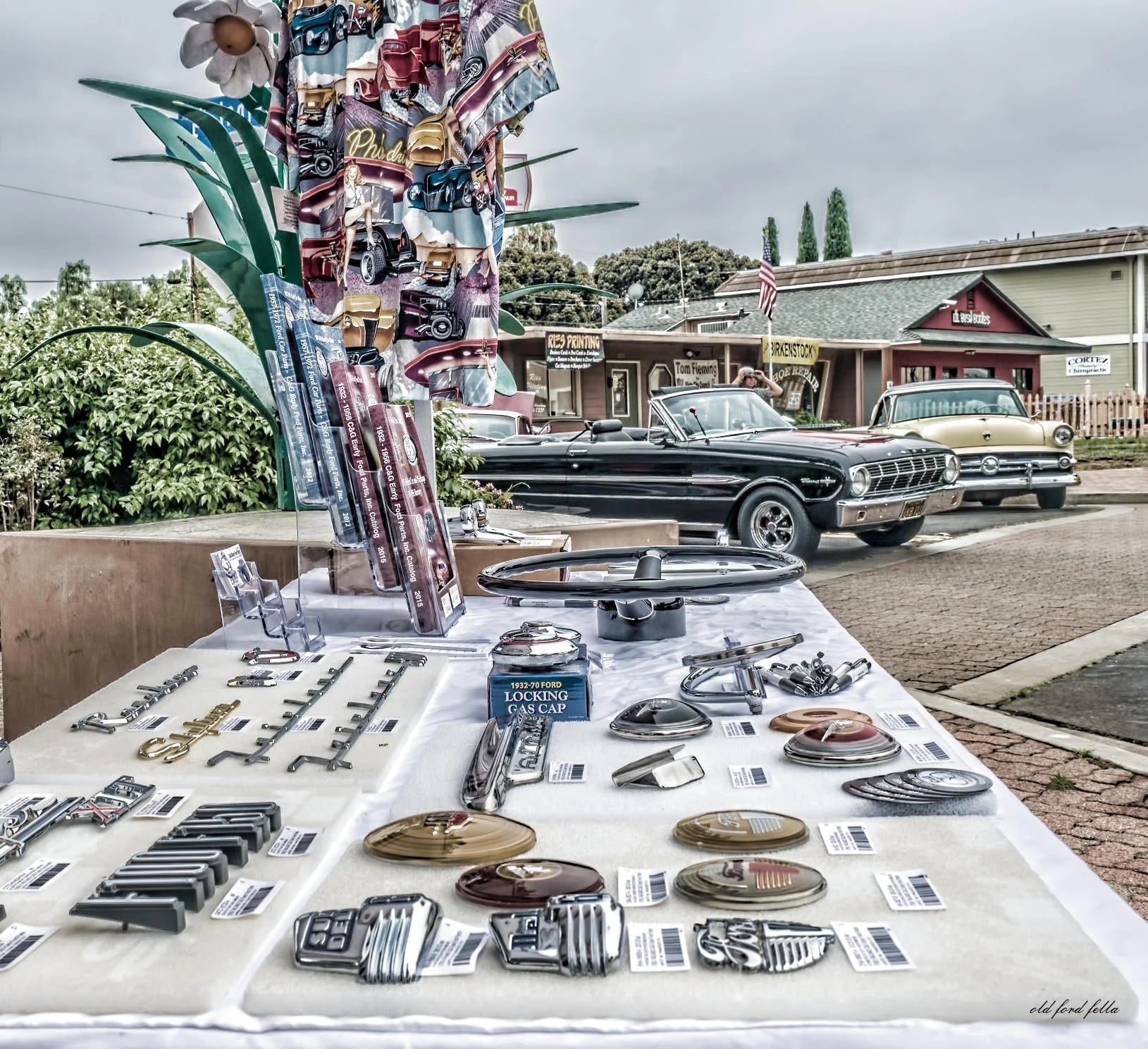
Part Numbers: Locating specific part numbers for a vehicle as old as the 1979 F150 can be challenging. However, some common parts include: Brake Pads: D84-2 Oil Filter: FL-1A Spark Plugs: AGSF32. For more specific parts and their numbers, enthusiasts often refer to vintage Ford parts catalogs or online forums. A great place to get real people to talk parts with, is C&G Ford Parts in Escondido, California.

Production Numbers: Ford does not publicly release detailed production numbers by year and model. However, it's known that the F-Series was America's best-selling truck in 1979, contributing significantly to the series' overall sales. The F150's popularity in this era helped solidify its legacy in the Ford lineup.

Accessories and Customization: The 1979 F150 was often customized and accessorized, reflecting the owner's needs and style. Popular accessories included: Chrome Bumpers: For enhanced aesthetics. Toolboxes: Fitted in the bed for utility. Lift Kits: Many owners lifted their trucks for off-road capability or for a more imposing road presence. Custom Paint Jobs: Reflecting the era's penchant for personalization.

Conclusion: The 1979 Ford F150 remains a beloved classic. Its robust construction, range of engine options, and classic styling have ensured its lasting appeal. While specific part numbers and production figures can be elusive, the truck's impact on the automotive landscape is undeniable. Whether restored to its original glory or customized for modern roads, the '79 F150 continues to be a symbol of Americana and the enduring legacy of Ford trucks.
Leave a comment

Please note, comments need to be approved before they are published.

MORE CLASSIC FORD INSIGHTS

No image

Ford F100 Parts

Owning or restoring a Ford F100 means that you’ll need easy access to Ford F100 parts whenever you need them. You want the right parts to keep your classic humming along for as long as you own it. If you’ve had your Ford for several years, then you probably already know where to get your hands on Ford F100 parts when you need them. If you don’t know because you haven’t had any issues with the truck until now, there are a lot of different ways you can find what you need. Check out places where other classic vehicle enthusiasts gather and talk to them. You can find groups that hang out on or offline. In some towns, the local drive-in restaurant has an area where classic car owners will gather on the weekends in order to show off their cars. The best place that you can buy Ford F100 parts is from an online store where the employees know about older model cars and trucks and can easily locate or order exactly what you need and ship it right to your doorstep. C&G Ford Parts fits that bill nicely. If you’ve already diagnosed the issue with your Ford and know exactly what part it is that you need, then getting it is going to be fairly simple. But, if like a lot of people, you don’t have in depth knowledge about what could be causing your truck’s issue, the pros can help if they specialize in classic car parts. Many of the employees in a classic auto part business have a love and admiration for the classics and they really know the older vehicles inside and out. Plus, by serving a lot of classic car owners when they have needs, this business more than likely has a lot experience with a wide range of vehicle problems. They may have heard all kinds of stories about what’s going on with the Ford truck and helped other owners with the right Ford F100 parts. Not only will the site know what you’re looking for, but a lot of times, if you ask them how to put a part on, they can tell you how or share online video tutorials with you and save you time. You gain the benefit of their parts knowledge as well as their mechanical knowledge for the same price. What they may suggest and you may find helpful, is to get a catalog of the parts that they do carry so that you’ll have a listing of the parts and the prices. For most classic vehicle owners, they want their F100 truck in pristine condition inside and out. Getting a part that’s “good enough” isn’t enough, they want the best Ford F100 parts.
1979 Ford F150 in blue, front quarter view

Engine specs for the 1979 Ford F150

Engine specs for the 1979 Ford F150 The 1979 Ford F150 trucks marked the end of the sixth generation of the rugged F-Series pick up trucks, which spanned from 1973 to 1979. Characterized by its design and durability, the 1979 F150 came with a variety of engine options to suit different needs, from more fuel-efficient six-cylinders to powerful V8s. Here's a breakdown of the engine specifications for all models of the 1979 Ford F150: 4.9L Inline-6 (300 CID): This engine was the base option for many F-150s, known for its reliability and decent fuel efficiency for the time. It produced around 114 horsepower and 223 lb-ft of torque. 5.0L V8 (302 CID): A step up in terms of power, the 302 V8 offered a balance of performance and fuel economy, making around 140 horsepower and 239 lb-ft of torque. 5.8L V8 (351 CID) Windsor: The 351 Windsor was another popular V8 option, known for its robustness and torque. It delivered approximately 150 horsepower and 265 lb-ft of torque. 5.8L V8 (351 CID) Modified (M): The 351M, often confused with the Cleveland, was a variant designed for torque more than outright power, with similar horsepower to the Windsor but different in technical specifications. 6.6L V8 (400 CID): The 400 was essentially a 351M with a longer stroke, offering more torque at lower RPMs, making it ideal for towing and heavy-duty applications. It produced around 158 horsepower and 277 lb-ft of torque. 7.5L V8 (460 CID): Available in certain models and regions, this was the largest and most powerful engine option for the F-150 in 1979, used primarily for heavy towing and high-performance needs. It delivered around 245 horsepower and 380 lb-ft of torque, though these numbers could vary slightly based on specific configurations and emissions controls. These engines were paired with a variety of transmission options, including three-speed or four-speed manuals, and the C6 automatic transmission for higher torque engines. The choice of engine and transmission significantly influenced the truck's performance, fuel economy, and towing capacity. Keep in mind, the specific output and performance can vary slightly based on factors like the truck's configuration, optional equipment, and condition. If you're looking into a specific model or have a particular use case in mind (like restoration or modification), it might be helpful to look into more detailed sources or forums dedicated to old Ford trucks, as they can offer a wealth of knowledge and specifics tailored to enthusiasts' needs. The towing capacity of a 1979 Ford F150 can vary significantly depending on the engine size, transmission type, rear axle ratio, and whether the truck is equipped with optional towing packages. Unfortunately, detailed towing capacity specs for vehicles of this era are not as readily available or as standardized as they are for modern vehicles. However, I can provide you with some general estimates and considerations. Engine Size and Power: Larger engines with more torque, such as the 6.6L V8 (400 CID) or the 7.5L V8 (460 CID), would naturally offer higher towing capacities due to their ability to generate more power and torque. These engines would be more suitable for heavier towing or hauling duties. Transmission Type: Trucks equipped with automatic transmissions generally have a higher towing capacity than those with manual transmissions due to the automatic's ability to better manage engine power and torque delivery. Rear Axle Ratio: A higher rear axle ratio can also increase towing capacity, as it provides more torque to the wheels at lower speeds, although this can come at the expense of fuel efficiency. Towing Packages: If the truck was equipped with a factory towing package, it would likely have included features such as a heavier-duty cooling system, stronger frame and suspension components, and possibly even a different rear axle ratio, all of which would contribute to an increased towing capacity. As a rough estimate, the towing capacity for a 1979 Ford F150 could range from about 4,000 to 7,000 pounds, depending on the factors mentioned above. It's important to note that these are general estimates, and the actual towing capacity could vary. If you're planning to tow with such a vehicle, it's crucial to consider not just the maximum towing capacity but also the weight of the trailer, the distribution of weight on the trailer, and the condition of the vehicle's engine, transmission, brakes, and suspension. For specific towing capacities and to ensure safe towing practices, it's recommended to consult a professional mechanic who is familiar with old Ford trucks or to refer to original Ford documentation or a reliable restoration guide.
Steering Wheel Removal Guide

Steering Wheel Removal Guide

Ford Applications Using D4TZ-3600-A Steering Wheel & D3TZ-13A805-A Horn Pad Servicing the steering column on classic Ford vehicles often requires removing the steering wheel assembly. When working with steering wheel D4TZ-3600-A and horn pad D3TZ-13A805-A applications, the process is straightforward when approached in the correct sequence and with the proper tool. This guide outlines the removal procedure based on original shop notes and preserves the mechanical order of operations. Application Scope Applies to Ford vehicles equipped with: D4TZ-3600-A Steering Wheel D3TZ-13A805-A Horn Pad TOOL-3600 Steering Wheel Puller Application may vary by model year or steering column configuration. Always confirm fitment before ordering replacement components. Original Shop Notes Remove two screws holding horn pad Undo wiring clips for horn pad Loosen steering wheel nut Attach steering wheel tool Loosen wheel Remove tool and nut Remove wheel Step-By-Step Technical Interpretation 1. Remove Horn Pad Retaining Screws The horn pad is secured to the steering wheel by two screws. Removing these fasteners allows access to the internal wiring and steering wheel retaining nut. Use appropriate screwdriver to avoid damaging the screw head. 2. Disconnect Horn Pad Wiring Clips With the horn pad removed, carefully release the wiring clips connected to the horn contact assembly. These clips must be detached before steering wheel removal to prevent wire strain or terminal damage. 3. Loosen the Steering Wheel Retaining Nut Loosen the steering wheel nut but do not remove it completely at this stage. Leaving the nut partially threaded helps protect the steering shaft threads during puller use. 4. Install Steering Wheel Puller (TOOL-3600) Attach the steering wheel puller evenly to the threaded mounting holes in the wheel hub. The puller applies controlled pressure to separate the steering wheel from the tapered steering shaft. Using a puller prevents damage to the wheel hub and avoids stressing the column bearings or shaft splines. 5. Release the Steering Wheel from the Shaft Once the puller is properly secured, gradually tighten the tool until the steering wheel breaks free from the taper. After the wheel loosens, remove the puller and fully remove the steering wheel nut. The steering wheel can then be lifted off the column shaft. When Steering Wheel Removal Is Necessary Steering wheel removal is typically required during: Turn signal switch service Steering column restoration Column bearing inspection Steering wheel replacement Because the steering wheel is mounted on a tapered shaft, proper tool use is recommended to avoid damage. Restoration Considerations On older Ford steering columns, corrosion or age can increase resistance between the wheel hub and shaft taper. Controlled puller pressure is preferable to prying or hammering methods. Inspect wiring connectors and horn contacts while the assembly is disassembled. Access during wheel removal provides an opportunity to evaluate column components without additional tear down. Confirm steering column configuration and model year before ordering steering wheels, horn pads, or related steering components. Explore our full selection of classic Ford steering wheels, horn pads, and steering column components.