1979 Ford F150

1979 Ford F150

1979 Ford F150

The 1979 Ford F150 stands as a significant chapter in the storied history of Ford trucks. Known for its durability, classic design, and utility, the '79 F150 is a beloved model among enthusiasts of classic Ford automobiles.

Specifications

Engine Options: The 1979 F150 came with various engine options, including: 4.9L 300 Inline-6: A reliable workhorse known for its longevity. 5.0L 302 V8: Offered a balance of power and efficiency. 5.8L 351M V8 and 6.6L 400 V8: These larger engines were preferred for heavier towing and payload capacities.

Transmission: Standard: 3-speed manual. Optional: 4-speed manual and 3-speed automatic.

Dimensions: Wheelbase: Ranged from 117 inches (regular cab, short bed) to 155 inches (SuperCab, long bed). Length: Varied based on the model, from 188.5 inches to 235 inches. Width: Approximately 79 inches.

Towing and Payload: Depended on the engine and configuration, with the larger engines supporting greater capacities.

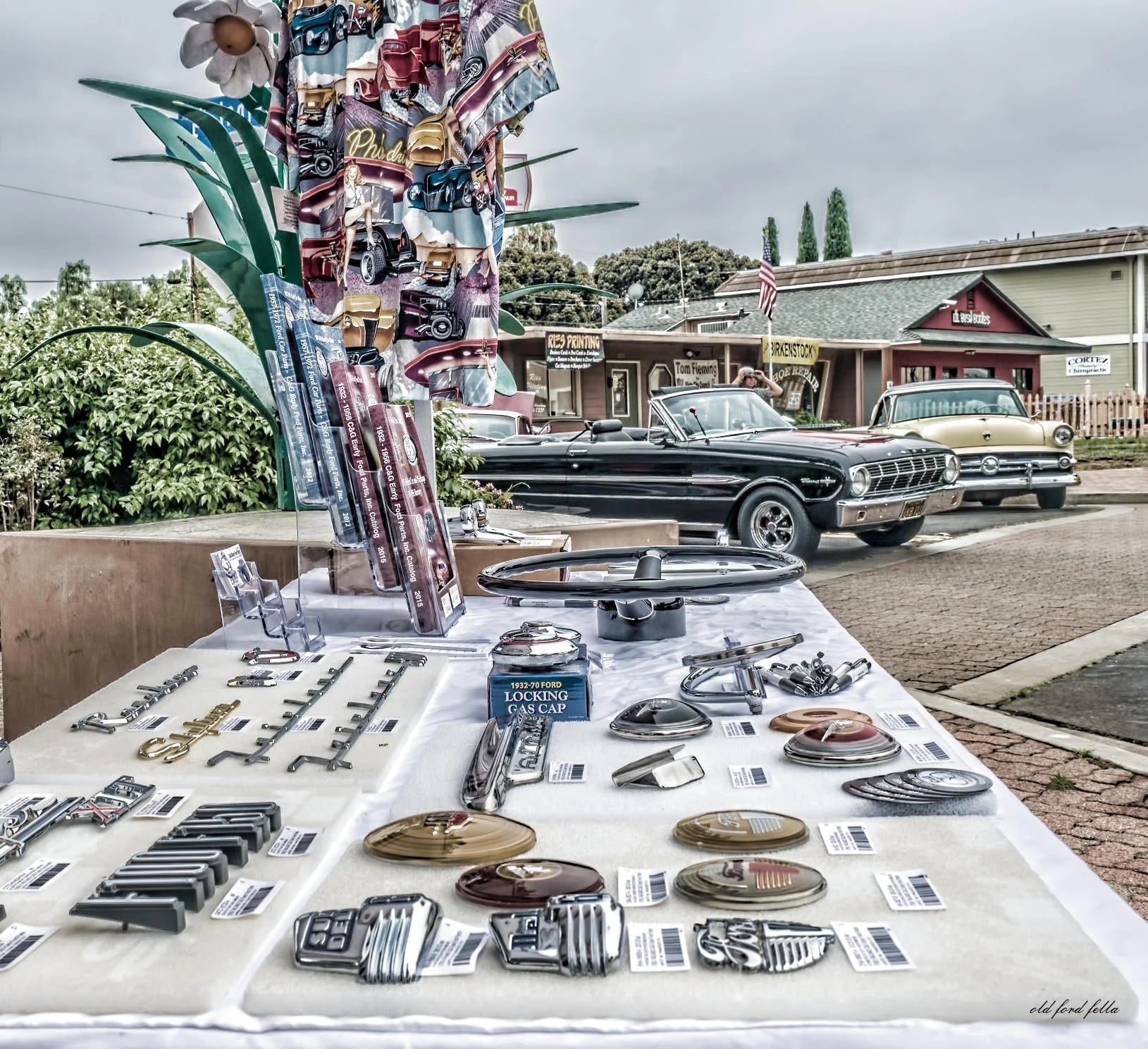
Part Numbers: Locating specific part numbers for a vehicle as old as the 1979 F150 can be challenging. However, some common parts include: Brake Pads: D84-2 Oil Filter: FL-1A Spark Plugs: AGSF32. For more specific parts and their numbers, enthusiasts often refer to vintage Ford parts catalogs or online forums. A great place to get real people to talk parts with, is C&G Ford Parts in Escondido, California.

Production Numbers: Ford does not publicly release detailed production numbers by year and model. However, it's known that the F-Series was America's best-selling truck in 1979, contributing significantly to the series' overall sales. The F150's popularity in this era helped solidify its legacy in the Ford lineup.

Accessories and Customization: The 1979 F150 was often customized and accessorized, reflecting the owner's needs and style. Popular accessories included: Chrome Bumpers: For enhanced aesthetics. Toolboxes: Fitted in the bed for utility. Lift Kits: Many owners lifted their trucks for off-road capability or for a more imposing road presence. Custom Paint Jobs: Reflecting the era's penchant for personalization.

Conclusion: The 1979 Ford F150 remains a beloved classic. Its robust construction, range of engine options, and classic styling have ensured its lasting appeal. While specific part numbers and production figures can be elusive, the truck's impact on the automotive landscape is undeniable. Whether restored to its original glory or customized for modern roads, the '79 F150 continues to be a symbol of Americana and the enduring legacy of Ford trucks.
Leave a comment

Please note, comments need to be approved before they are published.

MORE CLASSIC FORD INSIGHTS

No image

Ford F100 Parts

Owning or restoring a Ford F100 means that you’ll need easy access to Ford F100 parts whenever you need them. You want the right parts to keep your classic humming along for as long as you own it. If you’ve had your Ford for several years, then you probably already know where to get your hands on Ford F100 parts when you need them. If you don’t know because you haven’t had any issues with the truck until now, there are a lot of different ways you can find what you need. Check out places where other classic vehicle enthusiasts gather and talk to them. You can find groups that hang out on or offline. In some towns, the local drive-in restaurant has an area where classic car owners will gather on the weekends in order to show off their cars. The best place that you can buy Ford F100 parts is from an online store where the employees know about older model cars and trucks and can easily locate or order exactly what you need and ship it right to your doorstep. C&G Ford Parts fits that bill nicely. If you’ve already diagnosed the issue with your Ford and know exactly what part it is that you need, then getting it is going to be fairly simple. But, if like a lot of people, you don’t have in depth knowledge about what could be causing your truck’s issue, the pros can help if they specialize in classic car parts. Many of the employees in a classic auto part business have a love and admiration for the classics and they really know the older vehicles inside and out. Plus, by serving a lot of classic car owners when they have needs, this business more than likely has a lot experience with a wide range of vehicle problems. They may have heard all kinds of stories about what’s going on with the Ford truck and helped other owners with the right Ford F100 parts. Not only will the site know what you’re looking for, but a lot of times, if you ask them how to put a part on, they can tell you how or share online video tutorials with you and save you time. You gain the benefit of their parts knowledge as well as their mechanical knowledge for the same price. What they may suggest and you may find helpful, is to get a catalog of the parts that they do carry so that you’ll have a listing of the parts and the prices. For most classic vehicle owners, they want their F100 truck in pristine condition inside and out. Getting a part that’s “good enough” isn’t enough, they want the best Ford F100 parts.
The 1955 Ford Fairlane: A Classic Icon of American Automotive History

The 1955 Ford Fairlane: A Classic Icon of American Automotive History

The 1955 Ford Fairlane: A Classic Icon of American Automotive History In the realm of classic American automobiles, the 1955 Ford Fairlane stands out as a significant model that marked Ford's return to prominence in the auto market. Named after Henry Ford's estate, Fair Lane, in Dearborn, Michigan, the Fairlane was introduced as Ford's premier car for that year. With a new frame and 11" brakes, the Fairlane replaced the Crestline as the flagship offering. Design and Styling The 1955 Fairlane was distinguished by its elegant and modern styling, characterized by a lower, longer, and wider profile compared to its predecessors. It featured a distinctive stainless steel stripe running along its side with striking 2 tone paint schemes, which became a hallmark of the Fairlane models. The car was offered in six different body styles, including two- and four-door sedans, hardtop, and a convertible known as the Sunliner. A standout among these was the Crown Victoria, which boasted a tinted, transparent roof panel, adding a futuristic touch to its design. Engine and Performance The Fairlane came equipped with options for both a 223 cubic inch (3.7 L) straight-six engine, a 272 cubic inch (4.5 L) V8, or a 292 cubic inch V8 (4.8 L) with a 4 barrel carb providing buyers with choices tailored to different performance needs. The V8, in particular, was a point of interest for its power and smooth operation. Transmission options included a Fordomatic automatic or a three-speed manual. Market Impact The introduction of the Fairlane was part of a broader effort by Ford to rejuvenate its lineup and recapture market share from competitors like Chevrolet. The Fairlane was not just a vehicle; it was a statement of Ford's commitment to innovation and style. In 1955, Ford managed to outsell Chevrolet, ending a 20-year streak where Chevy had been the best-selling car in America, a testament to the Fairlane's appeal and Ford's strategic marketing. Features and Accessories Ford emphasized luxury and convenience with the Fairlane. It included features like dual exhaust systems on higher-end models which improved both performance and sound. The car also introduced several firsts, including Ford's first factory-installed air conditioning system, known as "Select Aire," which was optional. Innovations like the panoramic windshields, new for 1955, offered drivers a broader view, enhancing safety and driving experience. Cultural Impact The 1955 Fairlane wasn't just a car; it became an emblem of the era's optimism and love for automotive style. Its design and engineering influenced subsequent Ford models and left a lasting impression on American car culture. The Fairlane's success helped pave the way for future models, including the introduction of the Fairlane 500. Legacy Today, the 1955 Ford Fairlane is celebrated by collectors and car enlthusiasts for its blend of style, performance, and historical significance. Restorations are common, and the car's parts are sought after, with companies like Classic Industries providing a range of reproduction parts for enthusiasts looking to bring their Fairlane back to its original splendor. In conclusion, the 1955 Ford Fairlane was more than just another car on the road; it was a symbol of Ford's resurgence and a reflection of the vibrant automotive culture of the 1950s. Its design, performance, and the enduring legacy it left behind continue to make it a beloved piece of automotive history.
 37-41 Old Ford Trucks, Old Ford Car and Old Mercury Car Distributor

INSTALLING A CLASSIC FORD DISTRIBUTOR INTO OLD FORD TRUCKS AND CARS

INSTALLING A CLASSIC FORD DISTRIBUTOR 1932-1941 Old Ford Trucks, 1932-1941 Ford Passenger Cars and 1939-1941 Mercury Cars with original V8 distributor: 1. Check inner caps one at a time to make sure they fit distributor housing, sand them if needed. Also check to make sure once installed rotor does not hit the inner cap. After fitting inner caps put inner and outer caps together with the spark plug wires and set aside. 2. Mount coil to distributor making sure coil brush makes contact with rotor and copper contact is not bent. 3. Make sure the mounting surface is clean and there is nothing in the camshaft slot where the distributor mounts. Check to make sure mounting bolt threads are clean and free of dirt, set bolts on top of engine for easy reach. 4. Time to mount the distributor. Put gasket on base of distributor, you can put a small amount of sealant on the gasket. Place distributor on to timing cover using fingers to turn rotor to make sure distributor is correctly seated in the camshaft. The distributor will mount flat to the timing cover when correctly installed. If the distributor is not seated correctly you can crack the distributor case when you tighten the bolts. Now you can put the three mounting bolts in and tighten. Do not over tighten(snug). 5. Install inner/outer caps to the distributor and pop the bail over to hold in place. 6. Install vacuum line to distributor. 1941-47 (6 Cylinder “G” Engine) Old Ford Trucks and Passenger Cars, 1942-1947 Old Ford Trucks and 1942-1948 Passenger Cars/Mercury Cars (V8): 1. Make sure the mounting surface is clean and there is nothing in the camshaft slot where the distributor mounts. Check to make sure mounting bolt threads are clean and free of dirt, set bolts on top of engine for easy reach. 2. Place the rotor on distributor and mount distributor cap and turn rotor slowly to make sure the rotor does not hit the inner cap. If rotor hits cap lightly file end of rotor till it clears. Remove distributor cap and set aside. Leave rotor on distributor. 3. Time to mount the distributor. Put gasket on base of distributor, you can put a small amount of sealant on the gasket, be sure not to get sealant on vacuum rubber grommet. Place distributor on to timing cover using fingers to turn rotor to make sure distributor is correctly seated in the camshaft. The distributor will mount flat to the timing cover when correctly installed. If the distributor is not seated correctly you can crack the distributor case when you tighten the bolts. Now you can put the two mounting bolts in and tighten. Do not over tighten(snug). 4. Install distributor cap and pop clips on for 42 crab cap. If you have a 46-48 with the inner and outer cap you will have to install plug wires into cap first before installing caps on distributor.