1979 Ford F150

1979 Ford F150

1979 Ford F150

The 1979 Ford F150 stands as a significant chapter in the storied history of Ford trucks. Known for its durability, classic design, and utility, the '79 F150 is a beloved model among enthusiasts of classic Ford automobiles.

Specifications

Engine Options: The 1979 F150 came with various engine options, including: 4.9L 300 Inline-6: A reliable workhorse known for its longevity. 5.0L 302 V8: Offered a balance of power and efficiency. 5.8L 351M V8 and 6.6L 400 V8: These larger engines were preferred for heavier towing and payload capacities.

Transmission: Standard: 3-speed manual. Optional: 4-speed manual and 3-speed automatic.

Dimensions: Wheelbase: Ranged from 117 inches (regular cab, short bed) to 155 inches (SuperCab, long bed). Length: Varied based on the model, from 188.5 inches to 235 inches. Width: Approximately 79 inches.

Towing and Payload: Depended on the engine and configuration, with the larger engines supporting greater capacities.

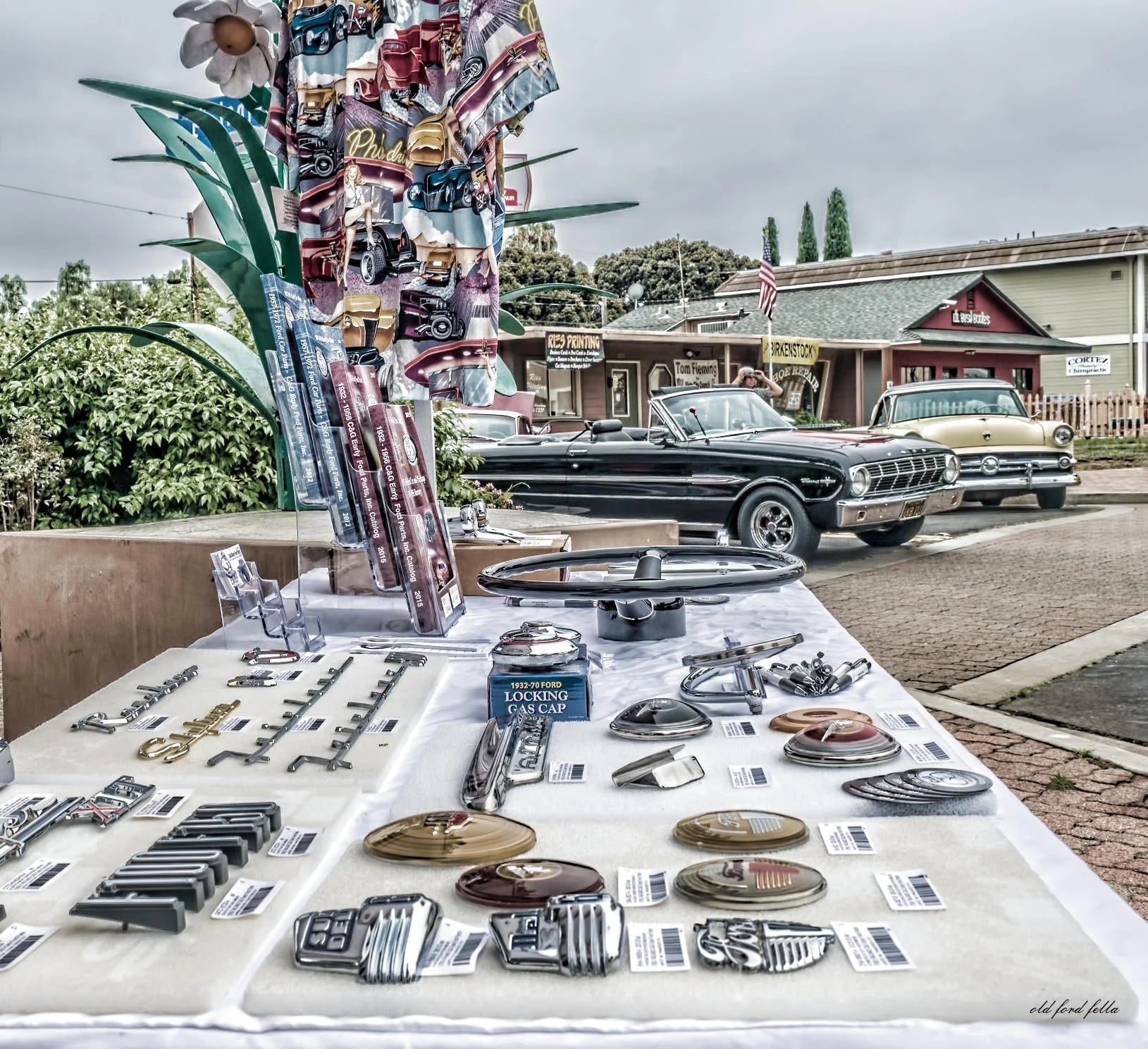
Part Numbers: Locating specific part numbers for a vehicle as old as the 1979 F150 can be challenging. However, some common parts include: Brake Pads: D84-2 Oil Filter: FL-1A Spark Plugs: AGSF32. For more specific parts and their numbers, enthusiasts often refer to vintage Ford parts catalogs or online forums. A great place to get real people to talk parts with, is C&G Ford Parts in Escondido, California.

Production Numbers: Ford does not publicly release detailed production numbers by year and model. However, it's known that the F-Series was America's best-selling truck in 1979, contributing significantly to the series' overall sales. The F150's popularity in this era helped solidify its legacy in the Ford lineup.

Accessories and Customization: The 1979 F150 was often customized and accessorized, reflecting the owner's needs and style. Popular accessories included: Chrome Bumpers: For enhanced aesthetics. Toolboxes: Fitted in the bed for utility. Lift Kits: Many owners lifted their trucks for off-road capability or for a more imposing road presence. Custom Paint Jobs: Reflecting the era's penchant for personalization.

Conclusion: The 1979 Ford F150 remains a beloved classic. Its robust construction, range of engine options, and classic styling have ensured its lasting appeal. While specific part numbers and production figures can be elusive, the truck's impact on the automotive landscape is undeniable. Whether restored to its original glory or customized for modern roads, the '79 F150 continues to be a symbol of Americana and the enduring legacy of Ford trucks.

Leave a comment

Please note, comments need to be approved before they are published.

MORE CLASSIC FORD INSIGHTS

C&G Ford Parts warehouse

Classic Ford Parts for Classy Old Fords

Classic Ford Parts for Classy Old Fords Seeing a vintage Ford gleaming in the sun at a local car show is a treat for the eyes, but even these beautiful vehicles need parts to keep them running smoothly. When something does go wrong with the vehicle, you need to find a store like ours – some place that understands the intricacies of troubleshooting and replacing old Ford parts and understands the mindset of the early Ford owner. You need to know that our selection covers 1932 through 1972 Old Ford cars and 1932 through 1979 old Ford trucks. We ship worldwide Monday through Friday. Unfortunately, you probably already personally experienced, and know all too well, what happens when you walk into a chain auto parts store looking for a part for a 1932 anything that Ford rolled off the assembly line. You’ll get a blank look for your asking. You might get lucky and the counter person will do a google search followed by a “no” if you’re lucky, or a shoulder shrug if you’re not. That’s because these shops carry more parts for current vehicles less than 10 years old and practically nothing for the Old Fords. So as a proof of concept; plug all the information about what you need for your vehicle into the online search area of a chain auto parts store, you’ll see no results and you’re back to square one. You can save yourself a lot of time and frustration by going straight to people like Kyle, Lee, Kristian or Joe – folks who know how important classic Ford parts are and exactly how to get those quality reproduction parts into your hands. People who own vintage Ford vehicles themselves. That’s one of the reasons we have over 200 vendors and tens of thousands of parts on the shelf, so that these vehicles get the right parts they need and will keep running long after other makes are sitting on the sidelines. When it comes to working on these old Ford vehicles, we have what you need, the folks who understand what you need and the "how it works", as well as the ability to get it to you fast anywhere in the world. Whether it’s a 1956 F100 truck and you need a windshield seal, or, a 1940 Ford car and it’s a tie rod, you’ll have to look no further than C&G Ford Parts. On the web or on the phone or even if you drop by and chew the fat at the parts counter, we know what classic Ford parts you need. So, forget the aftermarket big car parts chains and come experience good old fashioned customer service and quality know-how.
No image

Old Ford? Come experience GREAT customer service!

Old Ford? Come experience GREAT customer service! Have you had enough of poor customer service and lack of technical knowledge when it comes to your old Ford? Believe me we know what it's like. If you're like most people, you probably start off full of drive and excitement, and making good progress on your project for a few weeks or months, but then - Murphy gets busy annoying you! As soon as you get one thing sorted another pops up, you get distracted and your project gets dumped in the too hard basket. And to make matters worse, there's always that one person who keeps asking you how your restoration is going, and you know they're having a good old laugh at your expense. You end up feeling confused and overwhelmed by all the technical jargon and mechanical issues you just don't understand. Until recently the only solution for amateur mechanics trying to break through the restoration problem on an old Ford, was to either obtain a full-time flathead mechanic somewhere or to hire a restoration company to do it for you. The problem with this option is that expert flathead mechanics are hard to find, and even if you do manage to find one willing to help you out, you'll be looking at upwards of $100 per hour, which is simply out of reach for most old ford owners. And it's for this reason that I'm pleased to reveal C&G Ford Parts has free technical help for its customers and we are staffed with folks that currently own or have owned old Ford cars or old Ford trucks! Here at C&G Ford Parts we've been helping old Ford owners with their restoration needs and supplies for over 40 years! And what we've proven over and over in our business is that the easiest and most reliable way to finish up your project is by adding a go to guy to your toolbox. It's literally the difference between a frustrating and annoying project and a "life changing, quit your job" kind of result. (ok, maybe not quit your job). With C&G Ford Parts lending their expertise and supplying your parts you'll be able to restore your vehicle with the fun and excitement you had hoped it would bring! If you get stuck you always know all you need to do is dial us up or drop us an email and we'll be there! Now what makes our service different from any other parts service out there is that there's NO additional costs - No out today fees, no added shipping fees, no waiting for days for a tech to call back AND you're covered for as long as you're a customer! Let's take a look at how C&G Ford Parts helps you. Our customers enjoy: Free tech support from old ford owners Friendly live person customer service Best reproduction parts available Over 100 manufacturers Worldwide shipping This is just a taste of what people are already saying about C&G Ford Parts: ----- Well organized, responsive, helpful in planning parts needs for specific project —Lawrence G. ----- How quick and efficient can you guys get?!! —Terry M. So, You've wasted enough of your time, energy, and sanity on trying to fix those irritating issues by yourself! You can finally put an end to all your frustration and disappointment simply by giving C&G Ford parts a call, email or web form question. Just imagine waking up in the morning, opening your mailbox, and finding your parts order no matter where you are in the world. You smile to yourself as you realize the fun an old car can be when you have the right help. So pick up the phone or computer mouse and let us fill your old ford parts order quickly and efficiently.
Steering Wheel Removal Guide

Steering Wheel Removal Guide

Ford Applications Using D4TZ-3600-A Steering Wheel & D3TZ-13A805-A Horn Pad Servicing the steering column on classic Ford vehicles often requires removing the steering wheel assembly. When working with steering wheel D4TZ-3600-A and horn pad D3TZ-13A805-A applications, the process is straightforward when approached in the correct sequence and with the proper tool. This guide outlines the removal procedure based on original shop notes and preserves the mechanical order of operations. Application Scope Applies to Ford vehicles equipped with: D4TZ-3600-A Steering Wheel D3TZ-13A805-A Horn Pad TOOL-3600 Steering Wheel Puller Application may vary by model year or steering column configuration. Always confirm fitment before ordering replacement components. Original Shop Notes Remove two screws holding horn pad Undo wiring clips for horn pad Loosen steering wheel nut Attach steering wheel tool Loosen wheel Remove tool and nut Remove wheel Step-By-Step Technical Interpretation 1. Remove Horn Pad Retaining Screws The horn pad is secured to the steering wheel by two screws. Removing these fasteners allows access to the internal wiring and steering wheel retaining nut. Use appropriate screwdriver to avoid damaging the screw head. 2. Disconnect Horn Pad Wiring Clips With the horn pad removed, carefully release the wiring clips connected to the horn contact assembly. These clips must be detached before steering wheel removal to prevent wire strain or terminal damage. 3. Loosen the Steering Wheel Retaining Nut Loosen the steering wheel nut but do not remove it completely at this stage. Leaving the nut partially threaded helps protect the steering shaft threads during puller use. 4. Install Steering Wheel Puller (TOOL-3600) Attach the steering wheel puller evenly to the threaded mounting holes in the wheel hub. The puller applies controlled pressure to separate the steering wheel from the tapered steering shaft. Using a puller prevents damage to the wheel hub and avoids stressing the column bearings or shaft splines. 5. Release the Steering Wheel from the Shaft Once the puller is properly secured, gradually tighten the tool until the steering wheel breaks free from the taper. After the wheel loosens, remove the puller and fully remove the steering wheel nut. The steering wheel can then be lifted off the column shaft. When Steering Wheel Removal Is Necessary Steering wheel removal is typically required during: Turn signal switch service Steering column restoration Column bearing inspection Steering wheel replacement Because the steering wheel is mounted on a tapered shaft, proper tool use is recommended to avoid damage. Restoration Considerations On older Ford steering columns, corrosion or age can increase resistance between the wheel hub and shaft taper. Controlled puller pressure is preferable to prying or hammering methods. Inspect wiring connectors and horn contacts while the assembly is disassembled. Access during wheel removal provides an opportunity to evaluate column components without additional tear down. Confirm steering column configuration and model year before ordering steering wheels, horn pads, or related steering components. Explore our full selection of classic Ford steering wheels, horn pads, and steering column components.