Engine specs for the 1979 Ford F150

1979 Ford F150 in blue, front quarter view

Engine specs for the 1979 Ford F150

The 1979 Ford F150 trucks marked the end of the sixth generation of the rugged F-Series pick up trucks, which spanned from 1973 to 1979. Characterized by its design and durability, the 1979 F150 came with a variety of engine options to suit different needs, from more fuel-efficient six-cylinders to powerful V8s.

Here's a breakdown of the engine specifications for all models of the 1979 Ford F150:

  • 4.9L Inline-6 (300 CID): This engine was the base option for many F-150s, known for its reliability and decent fuel efficiency for the time. It produced around 114 horsepower and 223 lb-ft of torque.
  • 5.0L V8 (302 CID): A step up in terms of power, the 302 V8 offered a balance of performance and fuel economy, making around 140 horsepower and 239 lb-ft of torque.
  • 5.8L V8 (351 CID) Windsor: The 351 Windsor was another popular V8 option, known for its robustness and torque. It delivered approximately 150 horsepower and 265 lb-ft of torque.
  • 5.8L V8 (351 CID) Modified (M): The 351M, often confused with the Cleveland, was a variant designed for torque more than outright power, with similar horsepower to the Windsor but different in technical specifications.
  • 6.6L V8 (400 CID): The 400 was essentially a 351M with a longer stroke, offering more torque at lower RPMs, making it ideal for towing and heavy-duty applications. It produced around 158 horsepower and 277 lb-ft of torque.
  • 7.5L V8 (460 CID): Available in certain models and regions, this was the largest and most powerful engine option for the F-150 in 1979, used primarily for heavy towing and high-performance needs. It delivered around 245 horsepower and 380 lb-ft of torque, though these numbers could vary slightly based on specific configurations and emissions controls.

These engines were paired with a variety of transmission options, including three-speed or four-speed manuals, and the C6 automatic transmission for higher torque engines. The choice of engine and transmission significantly influenced the truck's performance, fuel economy, and towing capacity.

Keep in mind, the specific output and performance can vary slightly based on factors like the truck's configuration, optional equipment, and condition. If you're looking into a specific model or have a particular use case in mind (like restoration or modification), it might be helpful to look into more detailed sources or forums dedicated to old Ford trucks, as they can offer a wealth of knowledge and specifics tailored to enthusiasts' needs.

The towing capacity of a 1979 Ford F150 can vary significantly depending on the engine size, transmission type, rear axle ratio, and whether the truck is equipped with optional towing packages. Unfortunately, detailed towing capacity specs for vehicles of this era are not as readily available or as standardized as they are for modern vehicles. However, I can provide you with some general estimates and considerations.

Engine Size and Power: Larger engines with more torque, such as the 6.6L V8 (400 CID) or the 7.5L V8 (460 CID), would naturally offer higher towing capacities due to their ability to generate more power and torque. These engines would be more suitable for heavier towing or hauling duties.

Transmission Type: Trucks equipped with automatic transmissions generally have a higher towing capacity than those with manual transmissions due to the automatic's ability to better manage engine power and torque delivery. Rear Axle Ratio: A higher rear axle ratio can also increase towing capacity, as it provides more torque to the wheels at lower speeds, although this can come at the expense of fuel efficiency.

Towing Packages: If the truck was equipped with a factory towing package, it would likely have included features such as a heavier-duty cooling system, stronger frame and suspension components, and possibly even a different rear axle ratio, all of which would contribute to an increased towing capacity.

As a rough estimate, the towing capacity for a 1979 Ford F150 could range from about 4,000 to 7,000 pounds, depending on the factors mentioned above. It's important to note that these are general estimates, and the actual towing capacity could vary. If you're planning to tow with such a vehicle, it's crucial to consider not just the maximum towing capacity but also the weight of the trailer, the distribution of weight on the trailer, and the condition of the vehicle's engine, transmission, brakes, and suspension.

For specific towing capacities and to ensure safe towing practices, it's recommended to consult a professional mechanic who is familiar with old Ford trucks or to refer to original Ford documentation or a reliable restoration guide.

Leave a comment

Please note, comments need to be approved before they are published.

MORE CLASSIC FORD INSIGHTS

No image

YOUR CLASSIC FORD PARTS STORE

YOUR CLASSIC FORD PARTS STORE If you own a classic Ford, you’re used to dependability. You go out, you start the vehicle, and it runs. That’s the way it should be. After all, when it’s an older Ford, it has longevity built right into it. Sometimes, though, things will take a toll on the best ride you’ve ever owned. Could be the weather - or a little ding or two that happens when someone isn’t paying attention and they run into you. Whatever the reason, if you’ve got something on your list that you need for your old Ford, you can find it at a C&G Ford Parts. You’ll find thousands upon thousands of parts that can get your Ford in the best shape, even if you own one from the late 1970's. That’s sure to give you peace of mind right there. Say you’ve got a 1979 Ford F150 pickup. The jet-black custom paint on it just glints in the sunlight. Your truck is the envy of the neighborhood and everywhere else that you take it. You worked hard for that truck and you deserve to show it off. Taking a friend out for a round or two of golf, you park the truck in the lot carefully away from other cars. But you know how it goes. There always has to be someone who parks right up on you. Only this time, they broke your driver’s side mirror up pretty good and took off without having the decency of letting anyone know. When you do a thorough examination, you see that the door is fine, but the mirror can’t be repaired - the damage is too bad. It’s got to be replaced. Besides making you mad, you’re now faced with the task of figuring out where you’re going to go to get one like it. No worries, because you can get the part you need right at a classic Ford parts store, C&G Ford Parts to be exact. Places that have the stock you’re looking for can easily cover getting you that mirror in no time. Best of all, getting that replacement mirror in an exact match for your truck isn’t going to cost you every penny you’ve got in the bank. At C&G Ford parts, not only will you find what you need when you need it, but you’ll find it for a reasonable price as well. You can’t always prevent bad drivers from doing foolish things and ending up damaging your Ford. But you can rest assured knowing that a C&G Ford parts has got you covered. So take that truck out for a spin any time. They’ll be waiting on you when you need them.
Evolution of Ford Generators

Evolution of Ford Generators

The evolution of the early Ford generator is a fascinating journey through the annals of automotive history, showcasing Ford's pioneering role in electrical system innovation. From the early 1900s to the 1950s, Ford generators underwent significant transformations in design and output, reflecting the increasing electrical demands of automobiles. 1920s: The Birth of the Ford Generator In the 1920s, Ford transitioned from the magneto system to actual generators. These early generators, used in models like the Model T, were a leap forward in automotive electrical systems. They typically produced about 6-8 volts and 10-15 amperes. This was a modest output, but it marked a significant improvement over the earlier systems, providing more reliable power for lighting and ignition. 1930s: Advancements in Power Output By the 1930s, as vehicles incorporated more electrical components, classic Ford generators evolved to meet these new demands. The output increased to approximately 12 volts, with the current rising to around 30-40 amperes. This improvement was crucial in powering additional features like radios and heaters, which were becoming standard in vehicles. 1940s: Post-War Technological Growth Post-World War II, the 1940s saw further advancements in Ford generators. The output stabilized around 12 volts, but the current capabilities expanded, reaching up to 40-50 amperes. This era's generators were more efficient and reliable, reflecting technological advancements and the growing complexity of automotive electrical systems. 1950s: The Peak of Generator Technology The 1950s represented the peak of generator technology before the transition to alternators. Ford generators during this decade were robust, producing 12 volts and capable of up to 50-60 amperes. This increased capacity was essential for powering more sophisticated electrical systems, including advanced lighting, climate control, and entertainment systems. In conclusion, the evolution of the early Ford generator from the 1920s to the 1950s is a testament to Ford's innovation in automotive technology. Each decade brought significant improvements in output and reliability, mirroring the evolution of automobiles themselves. From the humble beginnings of powering basic vehicle functions to meeting the demands of more complex and luxurious features, Ford generators played a crucial role in the advancement of automotive electrical systems.
A classic old ford scene featuring 1940's Americana

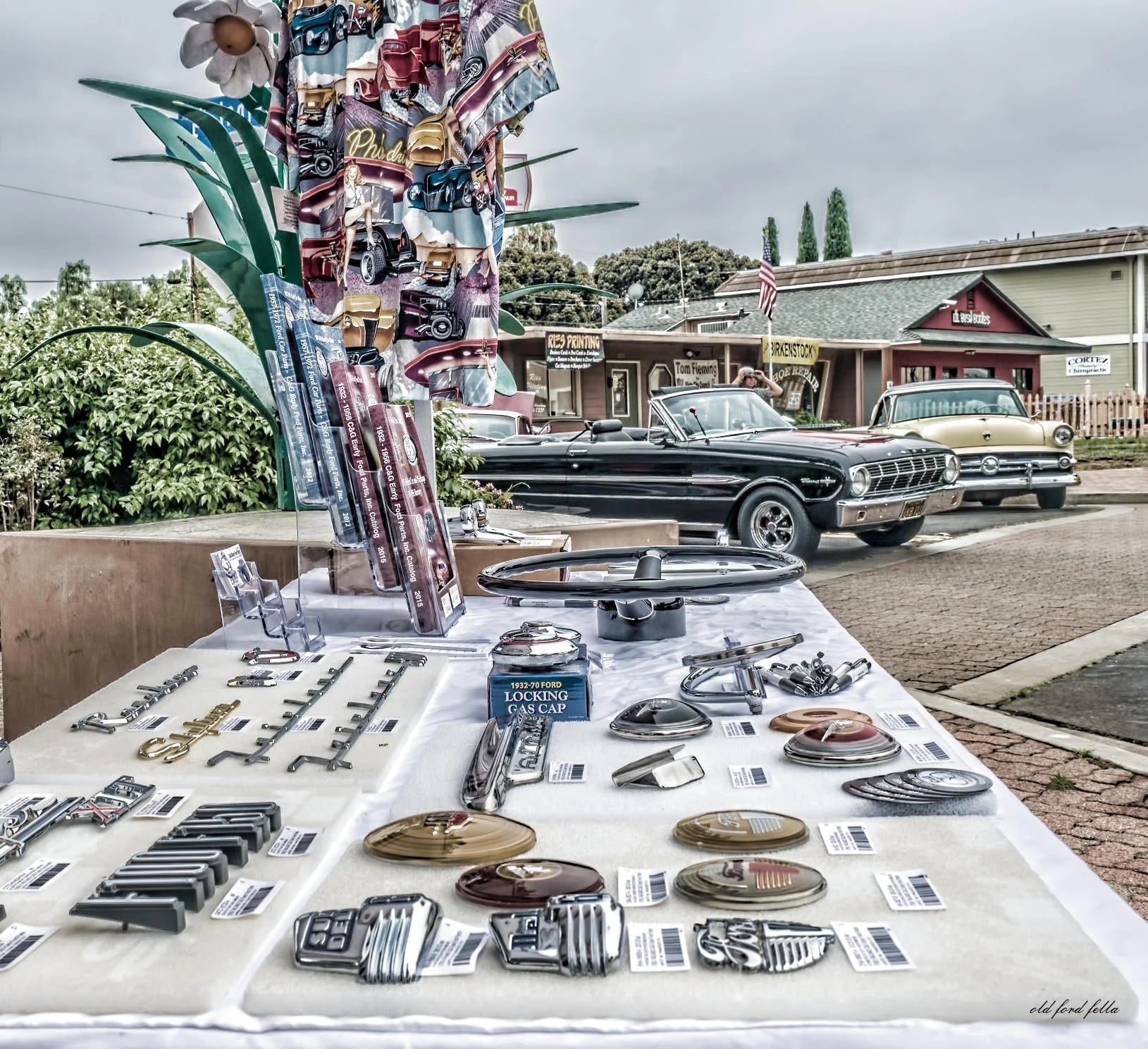
The Classic Ford Parts Niche and Americana

The world of classic Ford parts is a niche fueled by a unique blend of nostalgia, engineering marvel, and a deep-seated passion for automotive history. This niche isn't just about maintaining or restoring old vehicles; it's about preserving a legacy, a piece of Americana that has shaped and been shaped by decades of innovation and culture. At the heart of this niche are the classic Fords themselves - from the groundbreaking Model T, the first car to be mass-produced, to the Mustang, an icon of American muscle and the F series pick ups which supply the backbone of America. Each model represents a different era, a distinct style of engineering and design. Restoring these vehicles is more than a hobby; it's a journey back in time, an attempt to capture the essence of an era long gone. For those immersed in the classic Ford parts niche, the hunt components is a significant part of the excitement. These enthusiasts spend countless hours searching through auto flea markets, online forums, and specialty shops for that perfect part. The joy of finding a rare, original component can be as exhilarating as driving the restored vehicle itself. The community aspect of this niche is incredibly strong. Across the world, classic Ford owners and restorers come together, both online and in person, to share stories, exchange knowledge, and offer support. Car shows and meet-ups turn into celebrations of these automotive treasures, where the beauty and craftsmanship of classic Fords are displayed with pride. Moreover, the classic Ford parts niche is not just about the past; it's about sustainability. In a world increasingly concerned with environmental impact, restoring and maintaining older vehicles is a form of recycling, giving new life to old Fords that might otherwise be forgotten relics. In essence, the classic Ford parts niche is more than a collection of old cars and their components. It's a testament to the enduring impact of Ford's innovations on automotive culture. It's a community bound by a shared passion for the art of restoration, a reverence for history, and the thrill of bringing a piece of that history back to life. For many, it's not just a hobby; it's a way of connecting with the past and preserving it for future generations. Here at C&G Ford Parts we specialize in reproduction Ford parts.