Engine specs for the 1979 Ford F150

1979 Ford F150 in blue, front quarter view

Engine specs for the 1979 Ford F150

The 1979 Ford F150 trucks marked the end of the sixth generation of the rugged F-Series pick up trucks, which spanned from 1973 to 1979. Characterized by its design and durability, the 1979 F150 came with a variety of engine options to suit different needs, from more fuel-efficient six-cylinders to powerful V8s.

Here's a breakdown of the engine specifications for all models of the 1979 Ford F150:

  • 4.9L Inline-6 (300 CID): This engine was the base option for many F-150s, known for its reliability and decent fuel efficiency for the time. It produced around 114 horsepower and 223 lb-ft of torque.
  • 5.0L V8 (302 CID): A step up in terms of power, the 302 V8 offered a balance of performance and fuel economy, making around 140 horsepower and 239 lb-ft of torque.
  • 5.8L V8 (351 CID) Windsor: The 351 Windsor was another popular V8 option, known for its robustness and torque. It delivered approximately 150 horsepower and 265 lb-ft of torque.
  • 5.8L V8 (351 CID) Modified (M): The 351M, often confused with the Cleveland, was a variant designed for torque more than outright power, with similar horsepower to the Windsor but different in technical specifications.
  • 6.6L V8 (400 CID): The 400 was essentially a 351M with a longer stroke, offering more torque at lower RPMs, making it ideal for towing and heavy-duty applications. It produced around 158 horsepower and 277 lb-ft of torque.
  • 7.5L V8 (460 CID): Available in certain models and regions, this was the largest and most powerful engine option for the F-150 in 1979, used primarily for heavy towing and high-performance needs. It delivered around 245 horsepower and 380 lb-ft of torque, though these numbers could vary slightly based on specific configurations and emissions controls.

These engines were paired with a variety of transmission options, including three-speed or four-speed manuals, and the C6 automatic transmission for higher torque engines. The choice of engine and transmission significantly influenced the truck's performance, fuel economy, and towing capacity.

Keep in mind, the specific output and performance can vary slightly based on factors like the truck's configuration, optional equipment, and condition. If you're looking into a specific model or have a particular use case in mind (like restoration or modification), it might be helpful to look into more detailed sources or forums dedicated to old Ford trucks, as they can offer a wealth of knowledge and specifics tailored to enthusiasts' needs.

The towing capacity of a 1979 Ford F150 can vary significantly depending on the engine size, transmission type, rear axle ratio, and whether the truck is equipped with optional towing packages. Unfortunately, detailed towing capacity specs for vehicles of this era are not as readily available or as standardized as they are for modern vehicles. However, I can provide you with some general estimates and considerations.

Engine Size and Power: Larger engines with more torque, such as the 6.6L V8 (400 CID) or the 7.5L V8 (460 CID), would naturally offer higher towing capacities due to their ability to generate more power and torque. These engines would be more suitable for heavier towing or hauling duties.

Transmission Type: Trucks equipped with automatic transmissions generally have a higher towing capacity than those with manual transmissions due to the automatic's ability to better manage engine power and torque delivery. Rear Axle Ratio: A higher rear axle ratio can also increase towing capacity, as it provides more torque to the wheels at lower speeds, although this can come at the expense of fuel efficiency.

Towing Packages: If the truck was equipped with a factory towing package, it would likely have included features such as a heavier-duty cooling system, stronger frame and suspension components, and possibly even a different rear axle ratio, all of which would contribute to an increased towing capacity.

As a rough estimate, the towing capacity for a 1979 Ford F150 could range from about 4,000 to 7,000 pounds, depending on the factors mentioned above. It's important to note that these are general estimates, and the actual towing capacity could vary. If you're planning to tow with such a vehicle, it's crucial to consider not just the maximum towing capacity but also the weight of the trailer, the distribution of weight on the trailer, and the condition of the vehicle's engine, transmission, brakes, and suspension.

For specific towing capacities and to ensure safe towing practices, it's recommended to consult a professional mechanic who is familiar with old Ford trucks or to refer to original Ford documentation or a reliable restoration guide.

Leave a comment

Please note, comments need to be approved before they are published.

MORE CLASSIC FORD INSIGHTS

Ford F100

Exploring an American Classic The Ford F100

The Ford F100, a member of the renowned F-Series, has a rich history that spans decades, evolving from a utilitarian work truck to a sought-after classic. Originally designed to meet the demands of post-war America, the F-100 has since become a symbol of vintage style and automotive nostalgia. The F-100 debuted in 1953, a milestone that marked the second generation of Ford's F-Series. Known for its increased dimensions, improved engines, and updated aesthetics, the F-100 was a significant upgrade from its predecessors. It featured a more powerful 215cid inline-six engine, with an option for a 239cid V8, delivering robust performance for the era. The truck boasted a maximum payload capacity of approximately 1,000 to 1,500 pounds, catering to the needs of businesses and individual users alike. In terms of pricing, the F-100 was marketed as an affordable, reliable work truck. Prices started around $1,600, a figure that, when adjusted for inflation, underscores the truck's value proposition. Fast forward to the present, and the Ford F100 occupies a different space in the automotive world. No longer just a work vehicle, it has become a beloved classic, cherished by collectors and enthusiasts. The market for vintage F-100s has seen a significant uptick, with fully restored models fetching prices upwards of $20,000 to $30,000, and exceptional specimens or custom builds going even higher. The appeal of the F-100 in today's market lies in its simplicity, classic design, and the nostalgia it evokes. It's a canvas for customization, with a thriving aftermarket offering everything from original replacement parts to modern upgrades. The versatility of the F-100 makes it a favorite among those looking to create a personalized classic that combines vintage charm with modern performance. The demand for original equipment specifications remains high, with purists seeking to restore F-100s to their factory glory. This desire for authenticity reflects a broader trend in the classic car market, where originality often equates to higher value. Conclusion The Ford F-100's journey from a practical utility vehicle to a cherished classic is a testament to its enduring appeal. In the current market, it embodies a blend of history, style, and the enduring legacy of Ford's commitment to utility and innovation. Whether restored to its original specifications or customized to modern tastes, the F-100 remains a beloved piece of American automotive history, with a vibrant community of enthusiasts keeping its spirit alive.
No image

Ford F100 Parts

Owning or restoring a Ford F100 means that you’ll need easy access to Ford F100 parts whenever you need them. You want the right parts to keep your classic humming along for as long as you own it. If you’ve had your Ford for several years, then you probably already know where to get your hands on Ford F100 parts when you need them. If you don’t know because you haven’t had any issues with the truck until now, there are a lot of different ways you can find what you need. Check out places where other classic vehicle enthusiasts gather and talk to them. You can find groups that hang out on or offline. In some towns, the local drive-in restaurant has an area where classic car owners will gather on the weekends in order to show off their cars. The best place that you can buy Ford F100 parts is from an online store where the employees know about older model cars and trucks and can easily locate or order exactly what you need and ship it right to your doorstep. C&G Ford Parts fits that bill nicely. If you’ve already diagnosed the issue with your Ford and know exactly what part it is that you need, then getting it is going to be fairly simple. But, if like a lot of people, you don’t have in depth knowledge about what could be causing your truck’s issue, the pros can help if they specialize in classic car parts. Many of the employees in a classic auto part business have a love and admiration for the classics and they really know the older vehicles inside and out. Plus, by serving a lot of classic car owners when they have needs, this business more than likely has a lot experience with a wide range of vehicle problems. They may have heard all kinds of stories about what’s going on with the Ford truck and helped other owners with the right Ford F100 parts. Not only will the site know what you’re looking for, but a lot of times, if you ask them how to put a part on, they can tell you how or share online video tutorials with you and save you time. You gain the benefit of their parts knowledge as well as their mechanical knowledge for the same price. What they may suggest and you may find helpful, is to get a catalog of the parts that they do carry so that you’ll have a listing of the parts and the prices. For most classic vehicle owners, they want their F100 truck in pristine condition inside and out. Getting a part that’s “good enough” isn’t enough, they want the best Ford F100 parts.
C&G Ford Parts warehouse

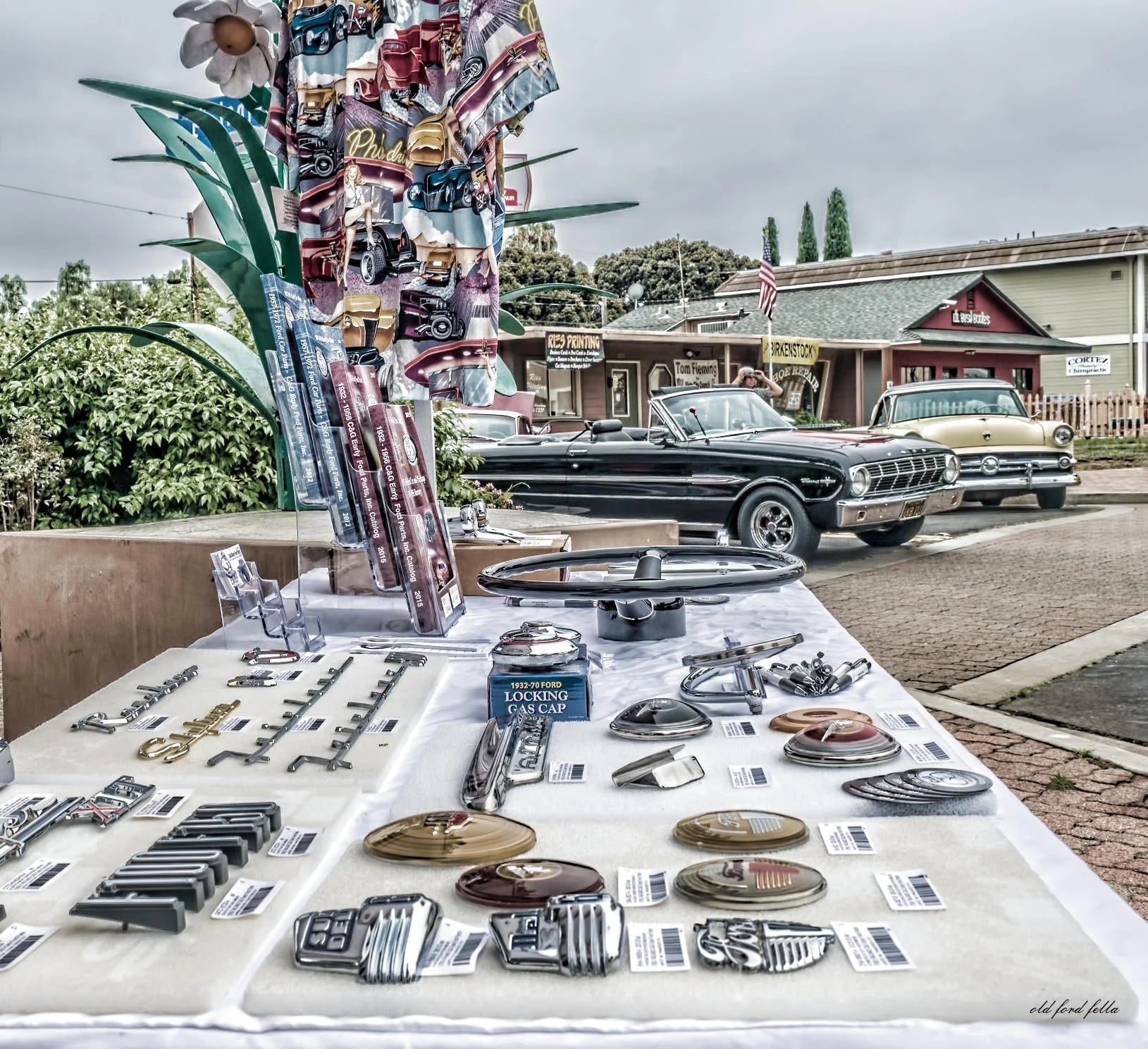
Classic Ford Parts for Classy Old Fords

Classic Ford Parts for Classy Old Fords Seeing a vintage Ford gleaming in the sun at a local car show is a treat for the eyes, but even these beautiful vehicles need parts to keep them running smoothly. When something does go wrong with the vehicle, you need to find a store like ours – some place that understands the intricacies of troubleshooting and replacing old Ford parts and understands the mindset of the early Ford owner. You need to know that our selection covers 1932 through 1972 Old Ford cars and 1932 through 1979 old Ford trucks. We ship worldwide Monday through Friday. Unfortunately, you probably already personally experienced, and know all too well, what happens when you walk into a chain auto parts store looking for a part for a 1932 anything that Ford rolled off the assembly line. You’ll get a blank look for your asking. You might get lucky and the counter person will do a google search followed by a “no” if you’re lucky, or a shoulder shrug if you’re not. That’s because these shops carry more parts for current vehicles less than 10 years old and practically nothing for the Old Fords. So as a proof of concept; plug all the information about what you need for your vehicle into the online search area of a chain auto parts store, you’ll see no results and you’re back to square one. You can save yourself a lot of time and frustration by going straight to people like Kyle, Lee, Kristian or Joe – folks who know how important classic Ford parts are and exactly how to get those quality reproduction parts into your hands. People who own vintage Ford vehicles themselves. That’s one of the reasons we have over 200 vendors and tens of thousands of parts on the shelf, so that these vehicles get the right parts they need and will keep running long after other makes are sitting on the sidelines. When it comes to working on these old Ford vehicles, we have what you need, the folks who understand what you need and the "how it works", as well as the ability to get it to you fast anywhere in the world. Whether it’s a 1956 F100 truck and you need a windshield seal, or, a 1940 Ford car and it’s a tie rod, you’ll have to look no further than C&G Ford Parts. On the web or on the phone or even if you drop by and chew the fat at the parts counter, we know what classic Ford parts you need. So, forget the aftermarket big car parts chains and come experience good old fashioned customer service and quality know-how.