Old Ford Pick-Up Trucks: A Timeless Utility

Old Ford Pick-Up Trucks: A Timeless Utility

Old Ford pick-up trucks have carved their place in automotive history, transcending generations with their enduring charm and unparalleled utility. These iconic vehicles, produced from the 1930s to the late 1970s, have a rich legacy that continues to capture the hearts of enthusiasts and collectors today.

Versatility Beyond Compare: One of the key reasons why old Ford pick-up trucks remain beloved is their sheer versatility. Whether it's the robust F100, the iconic F150, or the workhorse F250, these trucks were designed to handle tough tasks. From farm work to construction sites, they've been the backbone of American labor for decades.

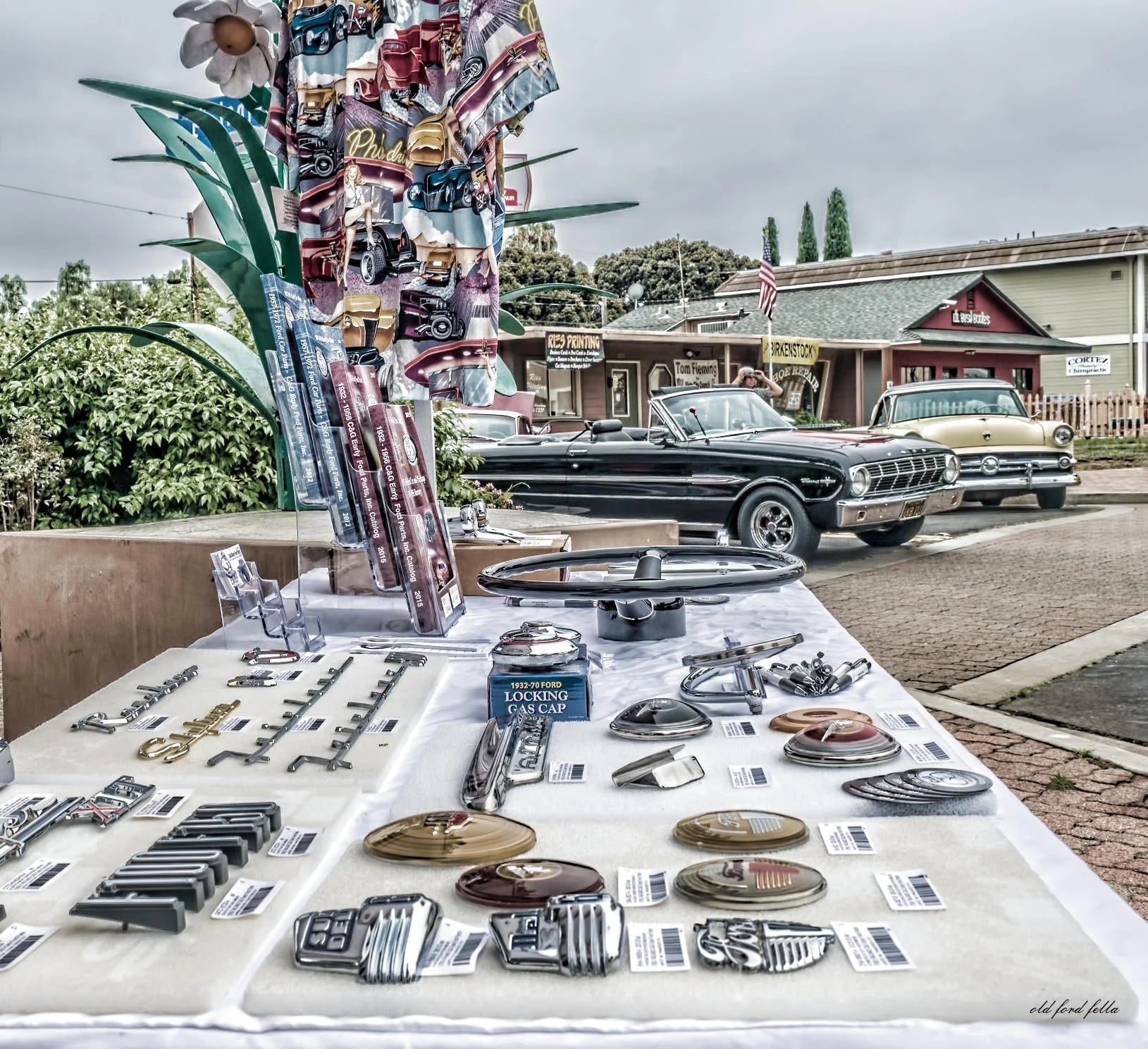
Classic Design That Turns Heads: The timeless design of these trucks is nothing short of legendary. With their distinctive combination of front grilles, headlights, and bold lettering, they exude a sense of nostalgia that's hard to replicate. Restoring and showcasing these vehicles at car shows is a popular hobby among enthusiasts, and it's no wonder – the sight of a beautifully restored old Ford pick-up truck is a showstopper.

A Connection to the Past: Owning and driving an old Ford pick-up truck is like stepping back in time. These vehicles carry with them the stories of countless adventures, road trips, and hard work. Many families have passed down their beloved Ford trucks from one generation to the next, making them cherished heirlooms. Endless Customization: Enthusiasts have embraced the art of customization, turning old Ford pick-up trucks into unique creations. From hot rods to custom paint jobs, the possibilities are endless.

Restoring and personalizing these trucks has become a thriving subculture in the automotive world. In conclusion, old Ford pick-up trucks are more than just vehicles; they're a symbol of American history, hard work, and ingenuity. Their enduring appeal and unmatched utility ensure that they will remain beloved classics for generations to come.

Leave a comment

Please note, comments need to be approved before they are published.

MORE CLASSIC FORD INSIGHTS

No image

Ford F100 Parts

Owning or restoring a Ford F100 means that you’ll need easy access to Ford F100 parts whenever you need them. You want the right parts to keep your classic humming along for as long as you own it. If you’ve had your Ford for several years, then you probably already know where to get your hands on Ford F100 parts when you need them. If you don’t know because you haven’t had any issues with the truck until now, there are a lot of different ways you can find what you need. Check out places where other classic vehicle enthusiasts gather and talk to them. You can find groups that hang out on or offline. In some towns, the local drive-in restaurant has an area where classic car owners will gather on the weekends in order to show off their cars. The best place that you can buy Ford F100 parts is from an online store where the employees know about older model cars and trucks and can easily locate or order exactly what you need and ship it right to your doorstep. C&G Ford Parts fits that bill nicely. If you’ve already diagnosed the issue with your Ford and know exactly what part it is that you need, then getting it is going to be fairly simple. But, if like a lot of people, you don’t have in depth knowledge about what could be causing your truck’s issue, the pros can help if they specialize in classic car parts. Many of the employees in a classic auto part business have a love and admiration for the classics and they really know the older vehicles inside and out. Plus, by serving a lot of classic car owners when they have needs, this business more than likely has a lot experience with a wide range of vehicle problems. They may have heard all kinds of stories about what’s going on with the Ford truck and helped other owners with the right Ford F100 parts. Not only will the site know what you’re looking for, but a lot of times, if you ask them how to put a part on, they can tell you how or share online video tutorials with you and save you time. You gain the benefit of their parts knowledge as well as their mechanical knowledge for the same price. What they may suggest and you may find helpful, is to get a catalog of the parts that they do carry so that you’ll have a listing of the parts and the prices. For most classic vehicle owners, they want their F100 truck in pristine condition inside and out. Getting a part that’s “good enough” isn’t enough, they want the best Ford F100 parts.
The Ford Flathead V8: The Engine That Put Power in the People’s Hands

The Ford Flathead V8: The Engine That Put Power in the People’s Hands

For anyone who’s ever turned a wrench on a pre-’54 Ford, the sound of a flathead V8 firing up is pure Samuel Fordway  what was once luxury-car territory available to the everyday American at a price they could actually afford. And for that, it earned legendary status under hoods and in hearts across generations. Before Henry Ford’s bold move, eight-cylinder engines were reserved for high-end makes like Cadillac and Packard. But the Ford Flathead changed all that. It was relatively simple, durable, and easy to work on—qualities still prized by today's restorers. Displacing 221 cubic inches and producing 65 horsepower in its first iteration, the flathead V8 steadily evolved through the years, eventually reaching outputs over 100 hp with the later 239 cid and 255 cid variants used in post-war cars and Mercury models. Beyond raw numbers, what makes the Flathead such an icon is its place in American hot rod culture. In the late ’40s and early ’50s, young gearheads yanked these V8s from junked Fords and dropped them into stripped-down coupes, roadsters, and belly tankers. Speed shops sprang up across the country offering hop-up parts—Edelbrock heads, dual-carb intakes, and Isky cams—turning the Flathead into a street and strip warrior. Today, the Flathead is enjoying a well-deserved renaissance. Whether you're restoring a '40 Ford Deluxe coupe or building a traditional highboy roadster, the right parts make all the difference. Original blocks are getting harder to come by, but high-quality reproduction parts—heads, water pumps, fuel pumps, gaskets, and period-correct hardware—make it possible to bring these iron legends back to life with factory precision. At C&G Ford Parts, we stock the real-deal reproduction parts classic Ford purists demand. Everything we sell is backed by decades of expertise and a crew that owns and drives classics just like yours. Ready to keep that Flathead purring like 1950 all over again? Explore our full line of flathead V8 parts and make history roar.
Old Ford Drum Brake History and Tutorial

Old Ford Drum Brake History and Tutorial

Old Ford drum brake history and tutorial Pre 1967 old Ford cars and old Ford trucks used a drum brake system. In these systems, pressure applied to the brake pedal is transmitted to the master cylinder, which in turn disperses the energy ultimately to the brakes in each wheel. The master cylinder uses the brake fluid to move the wheel cylinders, which in turn moves the brake shoes in the drum. There is a front and back brake shoe, the rear one for stopping a vehicle in drive and the forward one for stopping a vehicle in reverse. When either shoe is pressed against the anchor pin, the brakes are engaged, and the vehicle comes to a stop. The brake pads form the shoes to the anchor pin so there is no slipping. The padding on the rear brake shoe is typically longer and sometimes made of a different material to allow the shoes to wear at a similar rate, since the rear shoe sees much more use. The brake shoes are secured in the drum with both hardware and return springs, which must meet ideal sizing and tension specifications for your make and model for top brake performance. These parts should be replaced any time you work on the brakes in order to counteract wear and tear that can lead to longer stopping times. Stock brake line hoses will have a rubber lining, while aftermarket hoses are available in a stainless braided wrap to preserve the hose. Whichever type you get, make sure the hoses are the correct thread size and length for your year and model and meet DOT safety standards. The rear wheel drum brakes will also contain the parking brake mechanism and will have a cable to the parking brake. Brake pipe must be double flared and use flared nuts. It can be purchased with the flaring already completed or you can cut your own and flare it yourself, but it should meet or exceed DOT safety standards. Hydraulic brakes will fail if there is a weak point in the system, so make sure all your hose and fittings are SAE rated and correctly installed. If you are unsure after installation, test the brakes at low speed in a safe area, such as your driveway or an empty parking lot before taking the vehicle on the road. Starting in 1967 all old fords have a dual master cylinder. This part separates the wheel hydraulics of the front and rear of the car, so a failure in one will not cause a failure in the other. In vehicles without this feature, a leak anywhere in the brake line will cause the entire brake system to fail. With a dual master cylinder, a leak in the front brake system will not affect the rear and vice versa. This is standard in vehicles made after '67, but it's a good safety upgrade for older classic Fords as well. Many classic Ford owners choose to upgrade their front brake system to disc brakes, or the complete system. Drum brakes can overheat and fail in high braking conditions, such as rapid stops at high speeds or driving downhill on mountainous roads. Disc brakes are open and exposed to the outside air, which prevents overheating and brake failure. While this upgrade is not strictly necessary, it's a good idea if you frequently drive in hilly or mountainous areas. Original Ford brake shoes used asbestos in the brake pads. If you are working on a vehicle with its original brake shoes or if you are uncertain if they are original, wear a respirator rated for asbestos while working and wet the brake pads before opening the drum to prevent the asbestos from becoming air born. When cleaning dust from drum brakes, use a dense filtration system to trap the asbestos and dispose of it properly. You can resurface a drum with minor surface issues, but make sure it stays within factory limits for your year and model. Worn or thin drums can break apart or crack and cause brake failure. If you see excessive wear and tear, replace the drum. If you are replacing a leaking wheel cylinder, it's a good idea to do them all at once, including the master cylinder. If you have had problems with one, you will soon have problems with the rest. In addition, you won't need to remember which cylinder was replaced when for future maintenance if they were all replaced at once. You can use a vacuum bleeder to remove old brake fluid and contaminants. Once you remove the old fluid you can use denatured alcohol followed by air to purge the lines. Vacuum each cylinder, including the master cylinder, and replace the old fluid with new, DOT 3 or 4 fluids. When changing fluid, change the rubber hoses and seals. If you have a combination disc and drum system, only use DOT 4 fluid. To ensure a complete cleaning, vacuum some of the new fluid through as well do catch any missed contaminants. When working on or near the brake line, make sure no petroleum-based liquid, such as gasoline, oil, or mineral oil, encounters the hosing. These oils can break down the rubber and cause hoses to start leaking. Make sure to wash your hands thoroughly before and during working on the brakes system to prevent this, especially if you have been working on other parts of the vehicle. When working on your brakes, make sure to follow safety precautions, use safety rated parts, and check over your work carefully. Drum brakes are a very important part of the machinery, and due to the hydraulic system, can easily lose stopping power or fail if something is wrong, especially without a dual master cylinder. Whether you're doing regular maintenance or upgrading the whole system, working carefully will ensure a successful job for your vehicle.