Exploring an American Classic The Ford F100

Ford F100

The Ford F100, a member of the renowned F-Series, has a rich history that spans decades, evolving from a utilitarian work truck to a sought-after classic. Originally designed to meet the demands of post-war America, the F-100 has since become a symbol of vintage style and automotive nostalgia.

The F-100 debuted in 1953, a milestone that marked the second generation of Ford's F-Series. Known for its increased dimensions, improved engines, and updated aesthetics, the F-100 was a significant upgrade from its predecessors. It featured a more powerful 215cid inline-six engine, with an option for a 239cid V8, delivering robust performance for the era. The truck boasted a maximum payload capacity of approximately 1,000 to 1,500 pounds, catering to the needs of businesses and individual users alike.

In terms of pricing, the F-100 was marketed as an affordable, reliable work truck. Prices started around $1,600, a figure that, when adjusted for inflation, underscores the truck's value proposition. Fast forward to the present, and the Ford F100 occupies a different space in the automotive world. No longer just a work vehicle, it has become a beloved classic, cherished by collectors and enthusiasts.

The market for vintage F-100s has seen a significant uptick, with fully restored models fetching prices upwards of $20,000 to $30,000, and exceptional specimens or custom builds going even higher. The appeal of the F-100 in today's market lies in its simplicity, classic design, and the nostalgia it evokes. It's a canvas for customization, with a thriving aftermarket offering everything from original replacement parts to modern upgrades.

The versatility of the F-100 makes it a favorite among those looking to create a personalized classic that combines vintage charm with modern performance. The demand for original equipment specifications remains high, with purists seeking to restore F-100s to their factory glory. This desire for authenticity reflects a broader trend in the classic car market, where originality often equates to higher value.

Conclusion

The Ford F-100's journey from a practical utility vehicle to a cherished classic is a testament to its enduring appeal. In the current market, it embodies a blend of history, style, and the enduring legacy of Ford's commitment to utility and innovation. Whether restored to its original specifications or customized to modern tastes, the F-100 remains a beloved piece of American automotive history, with a vibrant community of enthusiasts keeping its spirit alive.

Leave a comment

Please note, comments need to be approved before they are published.

MORE CLASSIC FORD INSIGHTS

 37-41 Old Ford Trucks, Old Ford Car and Old Mercury Car Distributor

INSTALLING A CLASSIC FORD DISTRIBUTOR INTO OLD FORD TRUCKS AND CARS

INSTALLING A CLASSIC FORD DISTRIBUTOR 1932-1941 Old Ford Trucks, 1932-1941 Ford Passenger Cars and 1939-1941 Mercury Cars with original V8 distributor: 1. Check inner caps one at a time to make sure they fit distributor housing, sand them if needed. Also check to make sure once installed rotor does not hit the inner cap. After fitting inner caps put inner and outer caps together with the spark plug wires and set aside. 2. Mount coil to distributor making sure coil brush makes contact with rotor and copper contact is not bent. 3. Make sure the mounting surface is clean and there is nothing in the camshaft slot where the distributor mounts. Check to make sure mounting bolt threads are clean and free of dirt, set bolts on top of engine for easy reach. 4. Time to mount the distributor. Put gasket on base of distributor, you can put a small amount of sealant on the gasket. Place distributor on to timing cover using fingers to turn rotor to make sure distributor is correctly seated in the camshaft. The distributor will mount flat to the timing cover when correctly installed. If the distributor is not seated correctly you can crack the distributor case when you tighten the bolts. Now you can put the three mounting bolts in and tighten. Do not over tighten(snug). 5. Install inner/outer caps to the distributor and pop the bail over to hold in place. 6. Install vacuum line to distributor. 1941-47 (6 Cylinder “G” Engine) Old Ford Trucks and Passenger Cars, 1942-1947 Old Ford Trucks and 1942-1948 Passenger Cars/Mercury Cars (V8): 1. Make sure the mounting surface is clean and there is nothing in the camshaft slot where the distributor mounts. Check to make sure mounting bolt threads are clean and free of dirt, set bolts on top of engine for easy reach. 2. Place the rotor on distributor and mount distributor cap and turn rotor slowly to make sure the rotor does not hit the inner cap. If rotor hits cap lightly file end of rotor till it clears. Remove distributor cap and set aside. Leave rotor on distributor. 3. Time to mount the distributor. Put gasket on base of distributor, you can put a small amount of sealant on the gasket, be sure not to get sealant on vacuum rubber grommet. Place distributor on to timing cover using fingers to turn rotor to make sure distributor is correctly seated in the camshaft. The distributor will mount flat to the timing cover when correctly installed. If the distributor is not seated correctly you can crack the distributor case when you tighten the bolts. Now you can put the two mounting bolts in and tighten. Do not over tighten(snug). 4. Install distributor cap and pop clips on for 42 crab cap. If you have a 46-48 with the inner and outer cap you will have to install plug wires into cap first before installing caps on distributor.
No image

Ford F100 Parts

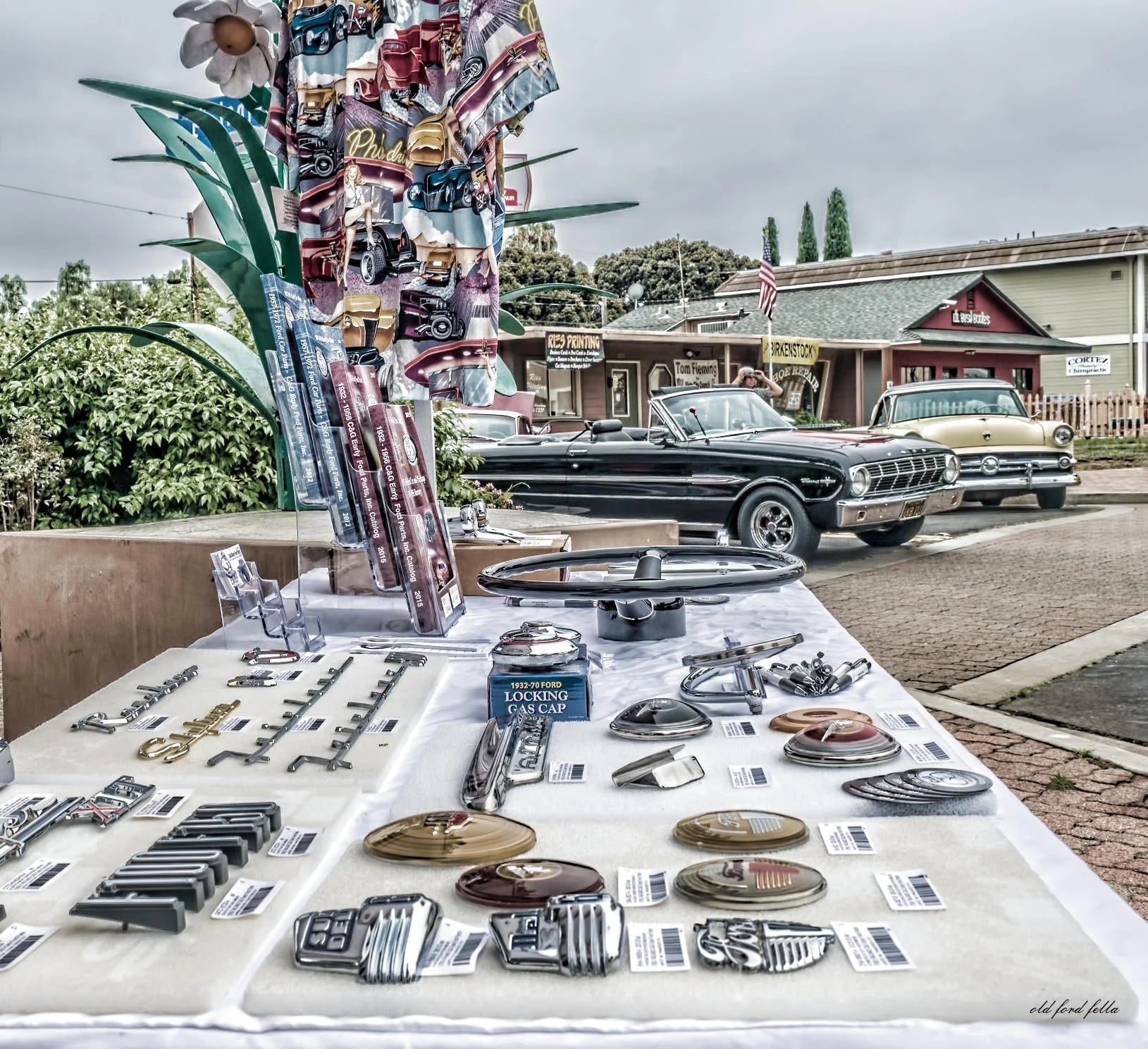
Owning or restoring a Ford F100 means that you’ll need easy access to Ford F100 parts whenever you need them. You want the right parts to keep your classic humming along for as long as you own it. If you’ve had your Ford for several years, then you probably already know where to get your hands on Ford F100 parts when you need them. If you don’t know because you haven’t had any issues with the truck until now, there are a lot of different ways you can find what you need. Check out places where other classic vehicle enthusiasts gather and talk to them. You can find groups that hang out on or offline. In some towns, the local drive-in restaurant has an area where classic car owners will gather on the weekends in order to show off their cars. The best place that you can buy Ford F100 parts is from an online store where the employees know about older model cars and trucks and can easily locate or order exactly what you need and ship it right to your doorstep. C&G Ford Parts fits that bill nicely. If you’ve already diagnosed the issue with your Ford and know exactly what part it is that you need, then getting it is going to be fairly simple. But, if like a lot of people, you don’t have in depth knowledge about what could be causing your truck’s issue, the pros can help if they specialize in classic car parts. Many of the employees in a classic auto part business have a love and admiration for the classics and they really know the older vehicles inside and out. Plus, by serving a lot of classic car owners when they have needs, this business more than likely has a lot experience with a wide range of vehicle problems. They may have heard all kinds of stories about what’s going on with the Ford truck and helped other owners with the right Ford F100 parts. Not only will the site know what you’re looking for, but a lot of times, if you ask them how to put a part on, they can tell you how or share online video tutorials with you and save you time. You gain the benefit of their parts knowledge as well as their mechanical knowledge for the same price. What they may suggest and you may find helpful, is to get a catalog of the parts that they do carry so that you’ll have a listing of the parts and the prices. For most classic vehicle owners, they want their F100 truck in pristine condition inside and out. Getting a part that’s “good enough” isn’t enough, they want the best Ford F100 parts.
Reproduction parts vs used/nos

Reproduction parts vs used/nos

As a classic Ford enthusiast, my journey in the realm of restoration has been nothing short of exhausting. The thrill of bringing a vintage beauty back to its former glory is unparalleled. However, this passion comes with its challenges, the most significant being sourcing the right parts. This is where classic reproduction Ford parts have become a game-changer for someone like me. For years, the pursuit of authentic, original used and NOS parts was akin to searching for a needle in a haystack. These parts, often scarce and very expensive, could mean the difference between a stalled project and a triumphant restoration. Then entered the world of reproduction parts – a world that has not only made restoration more accessible but also more reliable. Initially, I was skeptical about using reproduction parts. Would they fit correctly? Would they maintain the authentic look and feel of my classic Ford? These concerns, however, were quickly dispelled. Modern reproduction parts are crafted so that they seamlessly blend with the original components. Manufacturers use advanced technologies and materials to replicate parts. One of the biggest advantages I've experienced with reproduction parts is the availability of parts. Unlike original parts, which may have undergone decades of wear and tear, reproduction parts are brand new and often incorporate modern engineering improvements. This doesn't just bring peace of mind; it enhances the driving experience, making it safer and more enjoyable. From a cost perspective, reproduction parts are generally more affordable than their NOS counterparts. This affordability has allowed me to allocate resources to other aspects of restoration, like professional paint jobs or interior refurbishments. Moreover, the availability of these parts means less time scouring swap meets and more time in the garage, doing what I love. In conclusion, classic reproduction Ford parts have transformed the restoration landscape for enthusiasts like me. They bridge the gap between the past and the present, ensuring that the legacy of classic Fords continues to cruise down our roads, not just reside in our memories. They are a testament to the evolving nature of car restoration, blending tradition with innovation, and keeping the spirit of classic Fords alive and roaring.