1964 Ford Falcon Sprint a Brief History

1964 FORD FALCON SPRINT

1964 Ford Falcon Sprint

The 1964 Ford Falcon Sprint is a classic Ford car that holds a special place in the hearts of many car enthusiasts. This vintage Ford model was known for its sleek design, powerful engine, and affordable price. While it may have been over 50 years since its release, the 1964 Ford Falcon Sprint is still a highly sought-after car for collectors and enthusiasts alike. In this article, we will explore the history of this iconic car and discuss the process of restoring one to its former glory.

The History of the 1964 Ford Falcon Sprint 1964 Ford Falcon Sprint The Ford Falcon was first introduced in 1960 as a compact car designed to compete with other popular models of the time, such as the Chevrolet Corvair and the Plymouth Valiant. In 1963, Ford released the Falcon Sprint in hardtop and convertible, a sportier version of the original Falcon. The Sprint featured a more powerful 260 cid V8 engine, bucket seats, and a floor-mounted shifter (when equipped with the optional 4 speed), making it a popular choice among car enthusiasts. The Falcon Sprint hardtop was also used in various racing events, solidifying its reputation as a high-performance vehicle.

If you're looking to restore a 1964 Ford Falcon Sprint, the first step is to find one for sale. While it may be challenging to find one in good condition, there are still some available for purchase. You can search online for classic car dealerships or browse through online marketplaces such as eBay or Craigslist. It's essential to thoroughly inspect the car before making a purchase, as it may require significant restoration work.

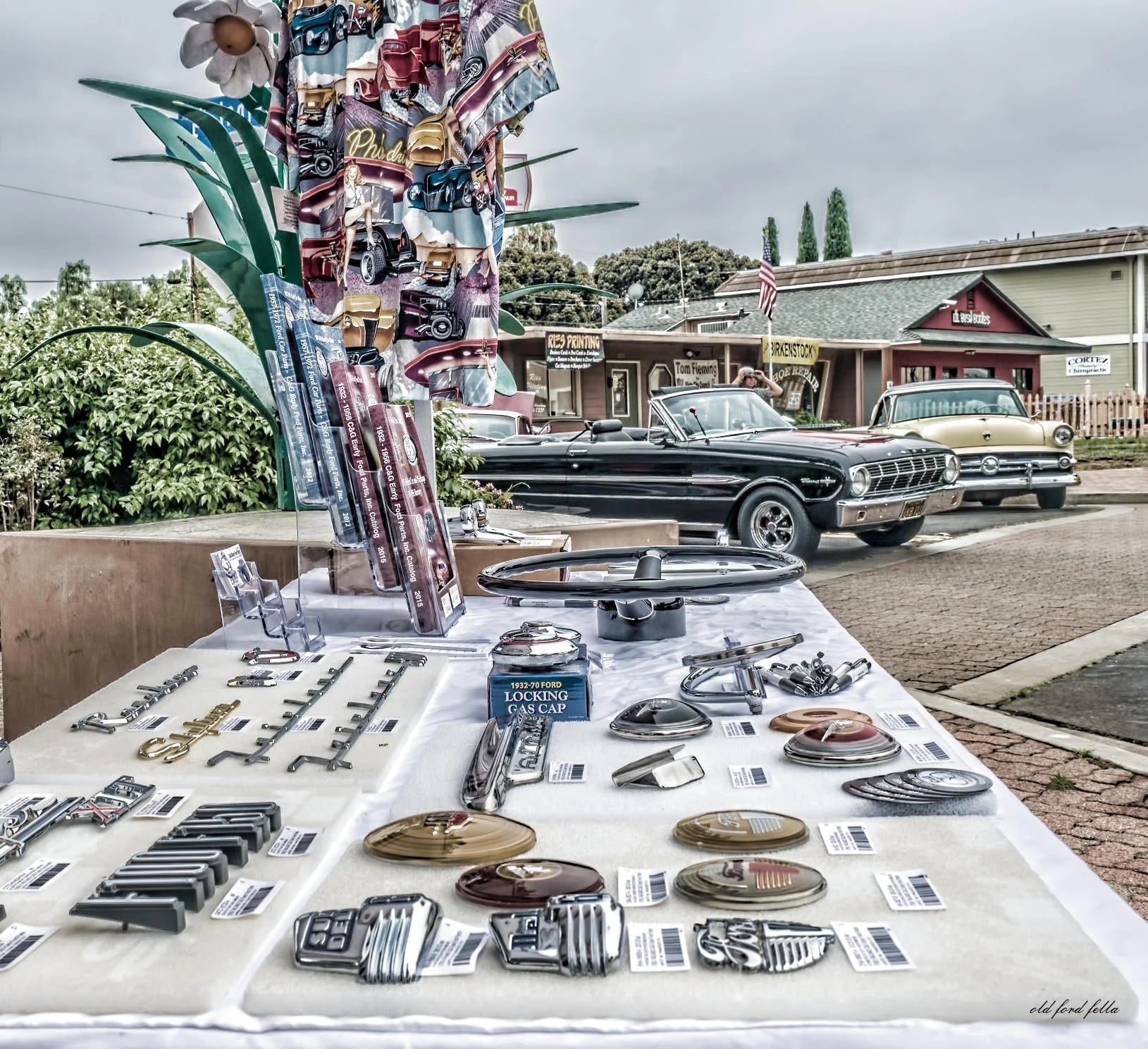
Restoring a vintage car like the 1964 Ford Falcon Sprint requires a lot of time, effort, and money. It's crucial to have a clear plan and budget in place before starting the restoration process. The first step is to assess the condition of the car and determine which parts need to be replaced or repaired. It's essential to use original or high-quality reproduction Ford parts to maintain the authenticity and value of the car.

Once you have successfully restored your 1964 Ford Falcon Sprint, it's crucial to maintain it properly to preserve its value and performance. Regular maintenance, such as oil changes, tune-ups, and inspections, is essential to keep the car running smoothly. It's also essential to store the car in a dry, climate-controlled environment to prevent rust and other damage. Owning a 1964 Ford Falcon Sprint is more than just having a classic car; it's about reviving nostalgia and preserving a piece of history.

Restoring this iconic car is a labor of love that requires dedication and passion. But the end result is a beautiful, high-performance vehicle that will turn heads and bring joy to its owner.

Are you a fan of the 1964 Ford Falcon Sprint? Have you restored one yourself? Share your thoughts and experiences in the comments below.

Leave a comment

Please note, comments need to be approved before they are published.

MORE CLASSIC FORD INSIGHTS

No image

Ford F100 Parts

Owning or restoring a Ford F100 means that you’ll need easy access to Ford F100 parts whenever you need them. You want the right parts to keep your classic humming along for as long as you own it. If you’ve had your Ford for several years, then you probably already know where to get your hands on Ford F100 parts when you need them. If you don’t know because you haven’t had any issues with the truck until now, there are a lot of different ways you can find what you need. Check out places where other classic vehicle enthusiasts gather and talk to them. You can find groups that hang out on or offline. In some towns, the local drive-in restaurant has an area where classic car owners will gather on the weekends in order to show off their cars. The best place that you can buy Ford F100 parts is from an online store where the employees know about older model cars and trucks and can easily locate or order exactly what you need and ship it right to your doorstep. C&G Ford Parts fits that bill nicely. If you’ve already diagnosed the issue with your Ford and know exactly what part it is that you need, then getting it is going to be fairly simple. But, if like a lot of people, you don’t have in depth knowledge about what could be causing your truck’s issue, the pros can help if they specialize in classic car parts. Many of the employees in a classic auto part business have a love and admiration for the classics and they really know the older vehicles inside and out. Plus, by serving a lot of classic car owners when they have needs, this business more than likely has a lot experience with a wide range of vehicle problems. They may have heard all kinds of stories about what’s going on with the Ford truck and helped other owners with the right Ford F100 parts. Not only will the site know what you’re looking for, but a lot of times, if you ask them how to put a part on, they can tell you how or share online video tutorials with you and save you time. You gain the benefit of their parts knowledge as well as their mechanical knowledge for the same price. What they may suggest and you may find helpful, is to get a catalog of the parts that they do carry so that you’ll have a listing of the parts and the prices. For most classic vehicle owners, they want their F100 truck in pristine condition inside and out. Getting a part that’s “good enough” isn’t enough, they want the best Ford F100 parts.
Kristian Tristans Mustang

CLASSIC MUSTANG PARTS

There’s nothing like the sound of a 289 V8 with a four-barrel carburetor purring down the street. When you’ve got the ponies galloping under the hood of a 1966 Mustang, it doesn’t matter if the sun is shining or the rain is pouring - it’s a beautiful day when you’re behind the wheel of a classic. Classic cars, especially ones like the Mustang, are always head turners. It’s no wonder your car sounds good. You’ve kept your beauty running smoothly with classic Mustang parts whenever you need to replace something. Sometimes, when you own a classic, just like with the newer model cars, a problem can develop unexpectedly. The problems can be small or large. For example, you might start to notice that your Mustang doesn’t have the same gallop it used to have. You don’t see what the problem is until one day, you see smoke like you’ve never seen before. When you see white smoke coming from the exhaust of the car, you need to get it home and check the dipstick to see if there’s a distinctive milky appearance in the oil. That could mean a blown head gasket. When you realize that there’s a blown head gasket, you know that in order to get the car up and running in the best of shape, you’ve got to find an auto store that sells classic Mustang parts. You may not have one local, you may have to order online, but whatever you have to do to get parts for your car, it’s worth any effort. You don’t want to compromise with just any parts seller, come to the best here at C&G Ford Parts! A lot of times, you’ll see shops advertise that their replacement parts for your classic car are so “identical looking” that you can’t see a visual difference. You may not be able to see a visual difference with a knock off part, but you can certainly tell a difference in how the car runs and in how long that part will last. Buying classic Mustang parts isn’t just for when you need to fix something on the car. These are what car enthusiasts look for when they’re restoring a classic to its former glory - and if you ever decide to sell you car, it should have parts made just for it. It doesn’t matter if it’s a small job like replacing your gas cap or a big job like replacing the windshield seal - you’ll get more mileage and less headaches by choosing classic Mustang parts from C&G Ford Parts, always choose the best.
 37-41 Old Ford Trucks, Old Ford Car and Old Mercury Car Distributor

INSTALLING A CLASSIC FORD DISTRIBUTOR INTO OLD FORD TRUCKS AND CARS

INSTALLING A CLASSIC FORD DISTRIBUTOR 1932-1941 Old Ford Trucks, 1932-1941 Ford Passenger Cars and 1939-1941 Mercury Cars with original V8 distributor: 1. Check inner caps one at a time to make sure they fit distributor housing, sand them if needed. Also check to make sure once installed rotor does not hit the inner cap. After fitting inner caps put inner and outer caps together with the spark plug wires and set aside. 2. Mount coil to distributor making sure coil brush makes contact with rotor and copper contact is not bent. 3. Make sure the mounting surface is clean and there is nothing in the camshaft slot where the distributor mounts. Check to make sure mounting bolt threads are clean and free of dirt, set bolts on top of engine for easy reach. 4. Time to mount the distributor. Put gasket on base of distributor, you can put a small amount of sealant on the gasket. Place distributor on to timing cover using fingers to turn rotor to make sure distributor is correctly seated in the camshaft. The distributor will mount flat to the timing cover when correctly installed. If the distributor is not seated correctly you can crack the distributor case when you tighten the bolts. Now you can put the three mounting bolts in and tighten. Do not over tighten(snug). 5. Install inner/outer caps to the distributor and pop the bail over to hold in place. 6. Install vacuum line to distributor. 1941-47 (6 Cylinder “G” Engine) Old Ford Trucks and Passenger Cars, 1942-1947 Old Ford Trucks and 1942-1948 Passenger Cars/Mercury Cars (V8): 1. Make sure the mounting surface is clean and there is nothing in the camshaft slot where the distributor mounts. Check to make sure mounting bolt threads are clean and free of dirt, set bolts on top of engine for easy reach. 2. Place the rotor on distributor and mount distributor cap and turn rotor slowly to make sure the rotor does not hit the inner cap. If rotor hits cap lightly file end of rotor till it clears. Remove distributor cap and set aside. Leave rotor on distributor. 3. Time to mount the distributor. Put gasket on base of distributor, you can put a small amount of sealant on the gasket, be sure not to get sealant on vacuum rubber grommet. Place distributor on to timing cover using fingers to turn rotor to make sure distributor is correctly seated in the camshaft. The distributor will mount flat to the timing cover when correctly installed. If the distributor is not seated correctly you can crack the distributor case when you tighten the bolts. Now you can put the two mounting bolts in and tighten. Do not over tighten(snug). 4. Install distributor cap and pop clips on for 42 crab cap. If you have a 46-48 with the inner and outer cap you will have to install plug wires into cap first before installing caps on distributor.