Old Ford Pick-Up Trucks: A Timeless Utility

Old Ford Pick-Up Trucks: A Timeless Utility

Old Ford pick-up trucks have carved their place in automotive history, transcending generations with their enduring charm and unparalleled utility. These iconic vehicles, produced from the 1930s to the late 1970s, have a rich legacy that continues to capture the hearts of enthusiasts and collectors today.

Versatility Beyond Compare: One of the key reasons why old Ford pick-up trucks remain beloved is their sheer versatility. Whether it's the robust F100, the iconic F150, or the workhorse F250, these trucks were designed to handle tough tasks. From farm work to construction sites, they've been the backbone of American labor for decades.

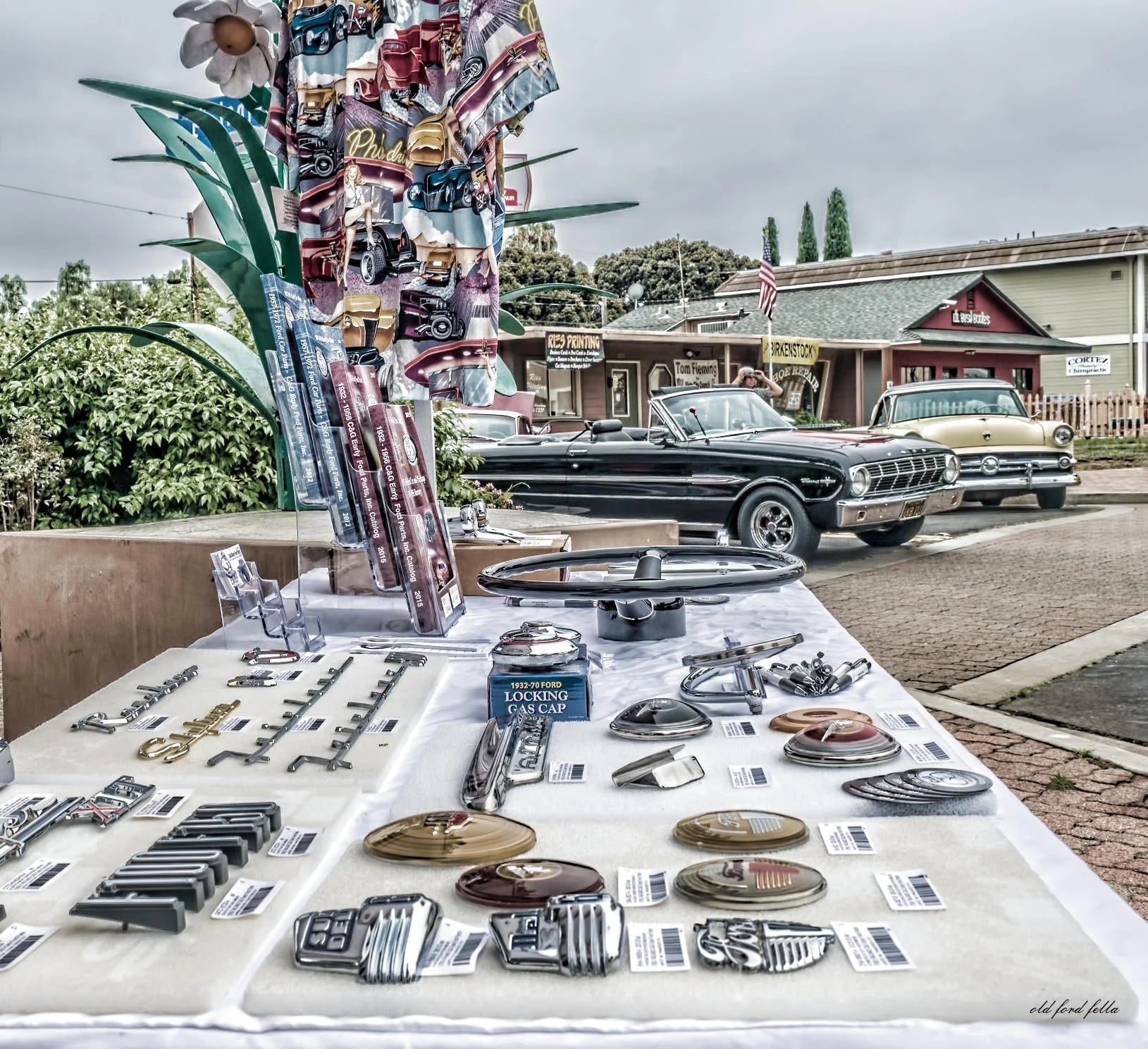
Classic Design That Turns Heads: The timeless design of these trucks is nothing short of legendary. With their distinctive combination of front grilles, headlights, and bold lettering, they exude a sense of nostalgia that's hard to replicate. Restoring and showcasing these vehicles at car shows is a popular hobby among enthusiasts, and it's no wonder – the sight of a beautifully restored old Ford pick-up truck is a showstopper.

A Connection to the Past: Owning and driving an old Ford pick-up truck is like stepping back in time. These vehicles carry with them the stories of countless adventures, road trips, and hard work. Many families have passed down their beloved Ford trucks from one generation to the next, making them cherished heirlooms. Endless Customization: Enthusiasts have embraced the art of customization, turning old Ford pick-up trucks into unique creations. From hot rods to custom paint jobs, the possibilities are endless.

Restoring and personalizing these trucks has become a thriving subculture in the automotive world. In conclusion, old Ford pick-up trucks are more than just vehicles; they're a symbol of American history, hard work, and ingenuity. Their enduring appeal and unmatched utility ensure that they will remain beloved classics for generations to come.


Leave a comment

Please note, comments need to be approved before they are published.

MORE CLASSIC FORD INSIGHTS

Flathead V8 Water Pump and Mount Service Guide

Flathead V8 Water Pump and Mount Service Guide

Flathead V8 Water Pump & Mount Service Guide1937–1948 Ford Passenger Car | 1939–1948 Mercury V8 Servicing the cooling system on a 1937–1948 Ford passenger car or 1939–1948 Mercury V8 requires more than just swapping a part. The flathead platform integrates the water pumps, front engine mounts, and cooling hoses in a way that makes access and sequencing important. Whether you’re replacing water pumps, water pump bolts, or addressing motor mounts at the same time, the process benefits from a clear plan. The parts referenced here include: 78-8501-PR – Water Pumps 78-8501-HK – Water Pump Bolts 78-6038-BDK – Motor Mounts These components are commonly serviced together on 37–48 Ford and 39–48 Mercury V8 applications due to their physical proximity and shared mounting areas. Why These Systems Overlap On these flathead V8 engines, the water pumps mount at the front of the block and are positioned near the front motor mount assembly. In many cases, removing the pumps requires relieving load from the mounts. Aging rubber mounts can sag over time, changing engine position slightly and complicating pump removal or installation. Addressing motor mounts during cooling system service can help maintain proper engine alignment. Fitment may vary slightly by model year or chassis configuration. Always confirm application for Ford passenger car versus Mercury V8 before ordering parts. Give us a call or email and we will answer your questions! Basic Removal Sequence A structured approach reduces stress on hardware and surrounding components: Drain CoolantBegin by fully draining the cooling system. Open the radiator petcock and, if equipped, block drains to remove as much coolant as possible. Remove Radiator Hoses (Upper and Lower)Disconnect both hoses from the radiator and water pump outlets. Inspect hose condition during removal. Loosen Motor Mount BoltsThe front motor mount assembly may need to be loosened to allow slight engine movement. Do not fully remove the mount until the engine is properly supported. Support the EngineCarefully jack up the engine using a wood block under the oil pan. The wood block helps distribute load. Raise only enough to relieve tension from the mounts. Remove All Eight Water Pump BoltsEach pump is secured with multiple bolts. Remove all mounting hardware evenly to prevent binding. The water pump bolt kit (78-8501-HK) ensures proper hardware replacement if originals are corroded or worn. *PRO TIP there is a bolt in each of the lower water pump outlets. Once the bolts are removed, the water pumps (78-8501-PR) can be removed from the block. Surfaces should be cleaned thoroughly before re-installation. Motor Mount Considerations The motor mount kit (78-6038-BDK) supports the engine’s front weight and isolates vibration from the frame. When mounts are deteriorated, engine position may shift slightly. Replacing mounts during water pump service is practical because access is already established and the engine is supported. Fitment should always be verified for specific Ford passenger car or Mercury V8 applications within the 1937–1948 and 1939–1948 ranges. Restoration-Focused Approach Flathead cooling system service is straightforward when handled methodically. These engines were designed for serviceability, but age introduces corrosion, hardware fatigue, and rubber deterioration. Replacing water pumps, water pump bolts, and motor mounts as a coordinated service helps maintain structural alignment and cooling integrity. Taking the time to follow proper removal steps protects original components and ensures the flathead V8 continues operating as intended. View our full selection of Flathead V8 Water Pumps and Cooling Components.
 37-41 Old Ford Trucks, Old Ford Car and Old Mercury Car Distributor

INSTALLING A CLASSIC FORD DISTRIBUTOR INTO OLD FORD TRUCKS AND CARS

INSTALLING A CLASSIC FORD DISTRIBUTOR 1932-1941 Old Ford Trucks, 1932-1941 Ford Passenger Cars and 1939-1941 Mercury Cars with original V8 distributor: 1. Check inner caps one at a time to make sure they fit distributor housing, sand them if needed. Also check to make sure once installed rotor does not hit the inner cap. After fitting inner caps put inner and outer caps together with the spark plug wires and set aside. 2. Mount coil to distributor making sure coil brush makes contact with rotor and copper contact is not bent. 3. Make sure the mounting surface is clean and there is nothing in the camshaft slot where the distributor mounts. Check to make sure mounting bolt threads are clean and free of dirt, set bolts on top of engine for easy reach. 4. Time to mount the distributor. Put gasket on base of distributor, you can put a small amount of sealant on the gasket. Place distributor on to timing cover using fingers to turn rotor to make sure distributor is correctly seated in the camshaft. The distributor will mount flat to the timing cover when correctly installed. If the distributor is not seated correctly you can crack the distributor case when you tighten the bolts. Now you can put the three mounting bolts in and tighten. Do not over tighten(snug). 5. Install inner/outer caps to the distributor and pop the bail over to hold in place. 6. Install vacuum line to distributor. 1941-47 (6 Cylinder “G” Engine) Old Ford Trucks and Passenger Cars, 1942-1947 Old Ford Trucks and 1942-1948 Passenger Cars/Mercury Cars (V8): 1. Make sure the mounting surface is clean and there is nothing in the camshaft slot where the distributor mounts. Check to make sure mounting bolt threads are clean and free of dirt, set bolts on top of engine for easy reach. 2. Place the rotor on distributor and mount distributor cap and turn rotor slowly to make sure the rotor does not hit the inner cap. If rotor hits cap lightly file end of rotor till it clears. Remove distributor cap and set aside. Leave rotor on distributor. 3. Time to mount the distributor. Put gasket on base of distributor, you can put a small amount of sealant on the gasket, be sure not to get sealant on vacuum rubber grommet. Place distributor on to timing cover using fingers to turn rotor to make sure distributor is correctly seated in the camshaft. The distributor will mount flat to the timing cover when correctly installed. If the distributor is not seated correctly you can crack the distributor case when you tighten the bolts. Now you can put the two mounting bolts in and tighten. Do not over tighten(snug). 4. Install distributor cap and pop clips on for 42 crab cap. If you have a 46-48 with the inner and outer cap you will have to install plug wires into cap first before installing caps on distributor.
No image

Ford F100 Parts

Owning or restoring a Ford F100 means that you’ll need easy access to Ford F100 parts whenever you need them. You want the right parts to keep your classic humming along for as long as you own it. If you’ve had your Ford for several years, then you probably already know where to get your hands on Ford F100 parts when you need them. If you don’t know because you haven’t had any issues with the truck until now, there are a lot of different ways you can find what you need. Check out places where other classic vehicle enthusiasts gather and talk to them. You can find groups that hang out on or offline. In some towns, the local drive-in restaurant has an area where classic car owners will gather on the weekends in order to show off their cars. The best place that you can buy Ford F100 parts is from an online store where the employees know about older model cars and trucks and can easily locate or order exactly what you need and ship it right to your doorstep. C&G Ford Parts fits that bill nicely. If you’ve already diagnosed the issue with your Ford and know exactly what part it is that you need, then getting it is going to be fairly simple. But, if like a lot of people, you don’t have in depth knowledge about what could be causing your truck’s issue, the pros can help if they specialize in classic car parts. Many of the employees in a classic auto part business have a love and admiration for the classics and they really know the older vehicles inside and out. Plus, by serving a lot of classic car owners when they have needs, this business more than likely has a lot experience with a wide range of vehicle problems. They may have heard all kinds of stories about what’s going on with the Ford truck and helped other owners with the right Ford F100 parts. Not only will the site know what you’re looking for, but a lot of times, if you ask them how to put a part on, they can tell you how or share online video tutorials with you and save you time. You gain the benefit of their parts knowledge as well as their mechanical knowledge for the same price. What they may suggest and you may find helpful, is to get a catalog of the parts that they do carry so that you’ll have a listing of the parts and the prices. For most classic vehicle owners, they want their F100 truck in pristine condition inside and out. Getting a part that’s “good enough” isn’t enough, they want the best Ford F100 parts.